
Japanese Santoku vs Chef Knife: 3 Knives Under $200 That Are Actually Worth It
Japanese Santoku vs Chef Knife: 3 Knives Under $200 That Are Actually Worth It
Disclosure: This post contains Amazon affiliate links. If you buy through them, we earn a small commission at no extra cost to you. It doesn’t change what we recommend.
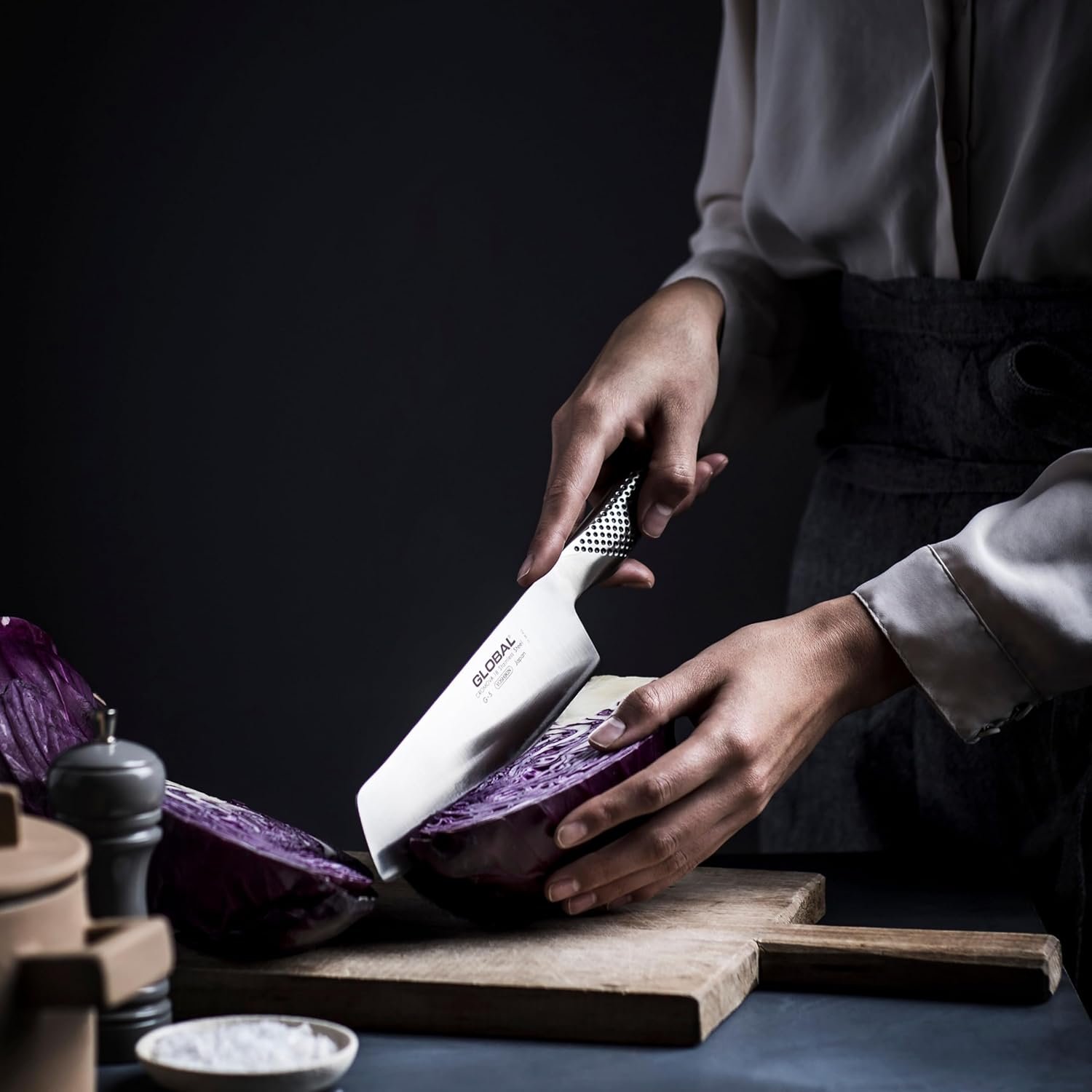
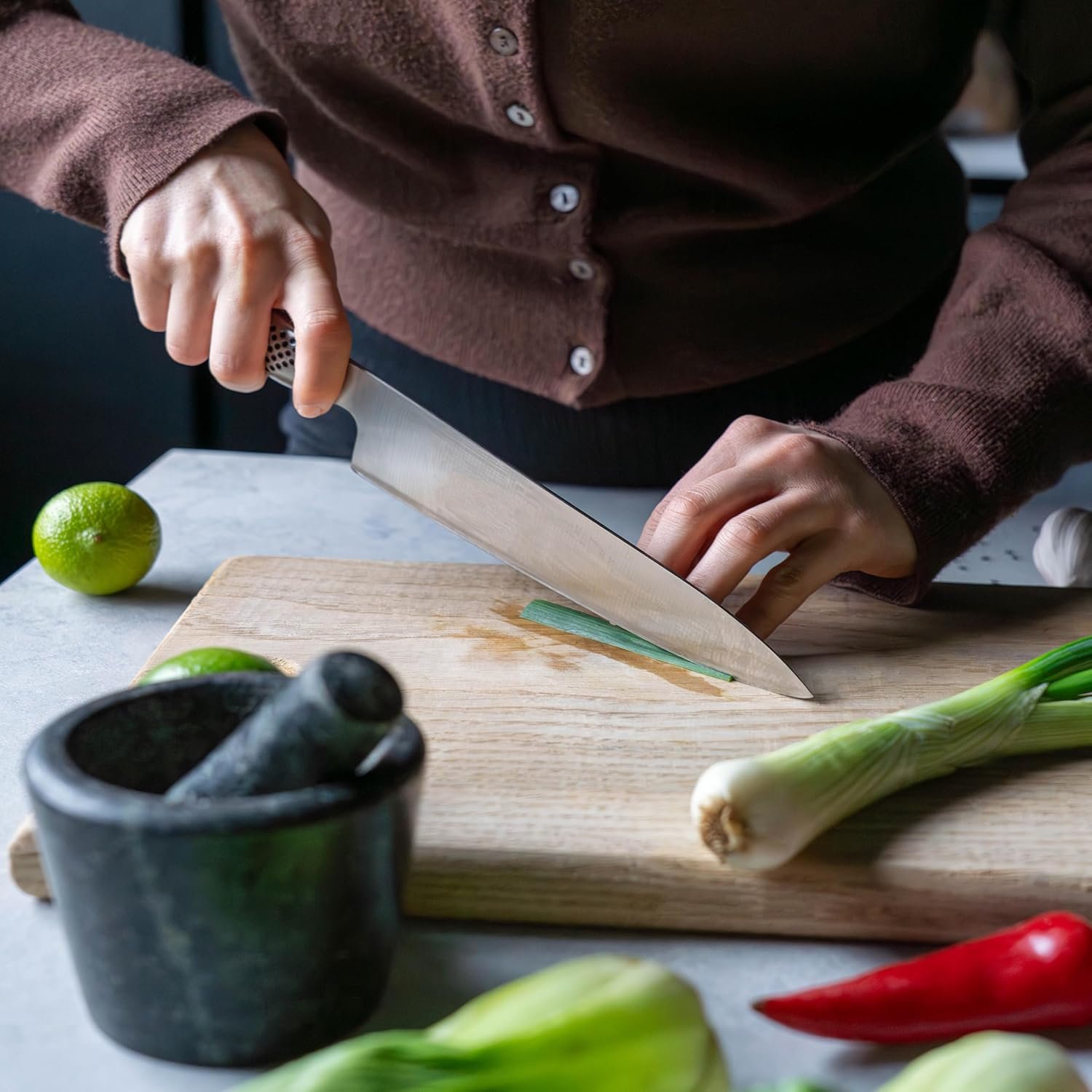
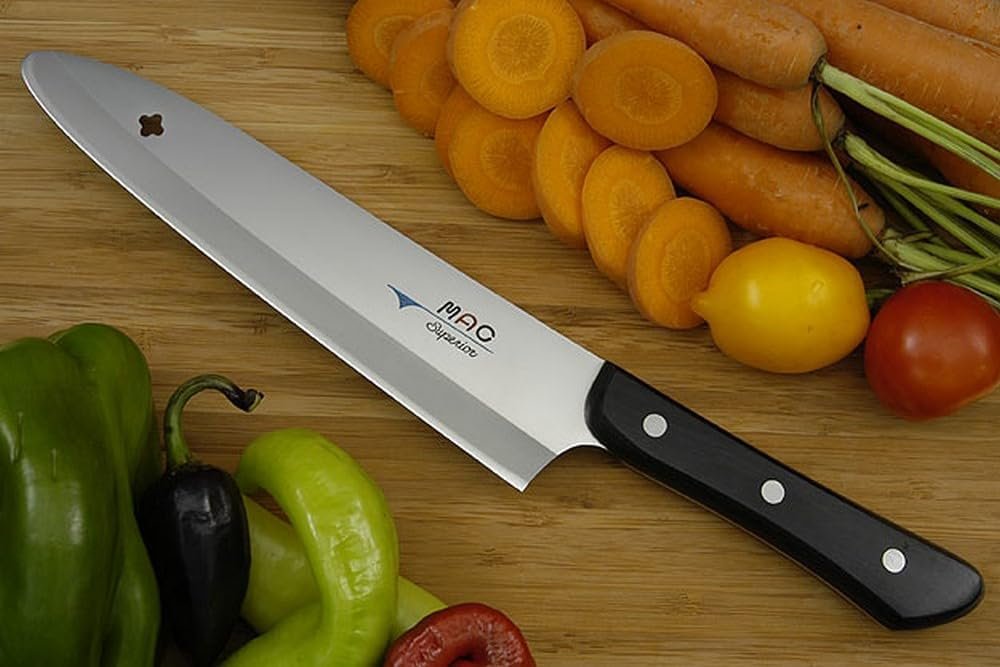
If you’re switching from a heavy German knife to something Japanese, get the Global G-2 8″ Chef’s Knife. It’s the closest thing to a universal upgrade for anyone used to a Wüsthof or Henckels. But if you mostly chop vegetables and want something a little more nimble, the MAC Superior Santoku is the better fit. Let’s get into why.
I get the same question from readers over and over: “I’ve got a decent German knife set already, so why would I spend more on a Japanese knife?” And honestly, it’s a fair question. But once you use a properly balanced Japanese blade for a week, going back to a thick German chef’s knife feels like cooking with a small axe. The weight, the edge geometry, even how the steel takes an edge — all of it is built around a different philosophy of cutting. This isn’t about one being objectively better than the other. It’s about which one matches how you actually cook.
All three knives below sit under $200, which is the sweet spot where you get real Japanese steel and construction without paying boutique prices for a hand-forged blade you don’t need for home cooking. I’ve used all three enough to know where they shine and where they’ll annoy you, so let’s get into the actual differences instead of the marketing copy.
Comparison at a Glance
| Knife | Price Range | Steel & Features | Weight | Best For |
|---|---|---|---|---|
| Global G-5 7″ Vegetable Knife | $130–$180 | CROMOVA 18 stainless, dimpled handle, convex edge | ~5.5 oz | Home cooks who prep a lot of vegetables |
| Global G-2 8″ Chef’s Knife | $140–$190 | CROMOVA 18 stainless, HRC 56-58, hollow sand-weighted handle | ~6 oz | First-time switchers from heavy German knives |
| MAC Superior Santoku | $110–$150 | High-carbon Mo-V steel, sub-zero tempered, HRC 61, pakkawood handle | ~5.6 oz | Cooks who want the sharpest edge in this lineup |
Product Reviews
Global G-5 7″ Vegetable Knife – Custom Engraved
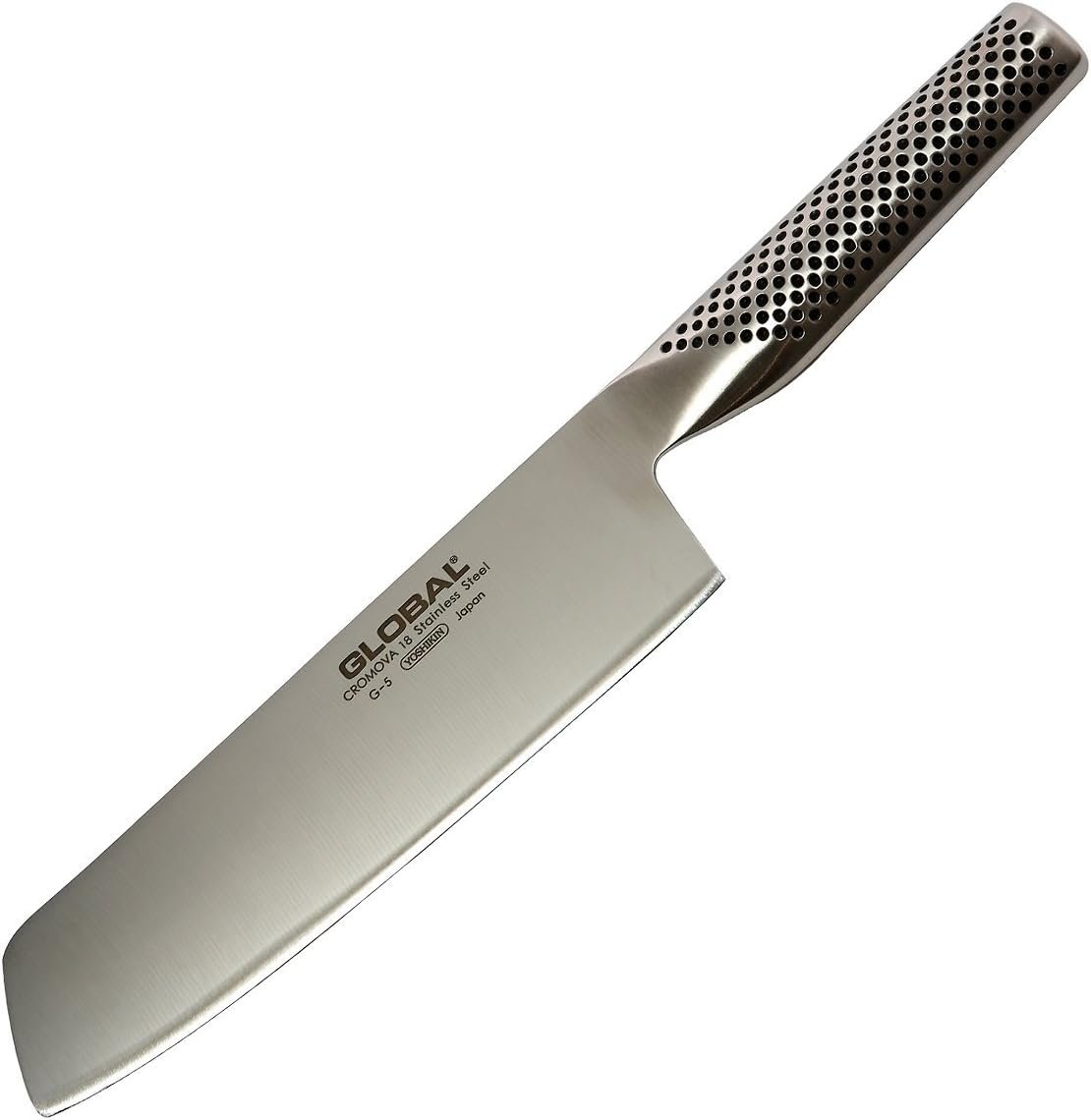
I keep this one out for anything involving a cutting board full of onions, carrots, and cabbage. The blade is flat enough to rock through a pile of veg without you having to lift the tip, and it’s light enough that an hour of prep doesn’t leave your wrist sore. The dimpled steel handle is a Global signature, and it works — food doesn’t stick to the sides nearly as much as it does with a flat-handled Western knife.
I learned this the hard way: the metal handle gets cold in a chilly kitchen, and if your hands are wet, it takes a second to find your grip. Not a dealbreaker. Just something nobody mentions in the marketing copy.
On maintenance, it’s low-effort. Hand wash, dry it right away, and skip the dishwasher. That’s really it. The steel is soft enough that a basic pull-through sharpener or a cheap whetstone brings the edge right back, so you’re not stuck learning a 15-degree angle by hand just to keep this thing usable. If you want a Japanese knife without committing to a whole sharpening ritual, this is about as easy as it gets.
✅ Pros
Rocks through vegetables with almost no resistance, even on tough stuff like winter squash. The dimples genuinely reduce food sticking to the blade. Light enough for long prep sessions without hand fatigue.
❌ Cons
The steel handle can feel slippery when wet, and it’s not the most comfortable for someone with bigger hands.
Global G-2 8″ Chef’s Knife with Custom Engraving
This is the knife I hand to people who’ve only ever used a heavy Western chef’s knife and want to know what the fuss over Japanese blades is about. It’s dramatically lighter than a Wüsthof Classic, and the balance point sits right at the handle, so it feels almost weightless mid-cut. If your wrist gets tired doing a big batch of onions with a German knife, switching to this one is the difference people usually notice first.
The trade-off is the steel. CROMOVA 18 is a soft stainless alloy, so this thing gets sharp fast and dulls faster than harder Japanese steels. So you’ll be honing it more often than you’d expect from a knife at this price. I sharpen mine every couple of weeks and it’s still not razor sharp between sessions the way a harder-steel knife would be.
There’s also the matter of the handle. Global fills the hollow steel handle with sand to get the balance right, which is a clever trick, but it means the handle itself has zero cushion. Long chopping sessions, especially with things like butternut squash, will make you notice it more than a wood or pakkawood handle would. And the smooth steel surface, dimples aside, isn’t quite as grippy as a textured composite handle once your hands get a little oily from prep.
✅ Pros
Extremely light and well-balanced, an easy first step for anyone coming from heavy German knives. Sharpens back to a usable edge in minutes, even with basic sharpening tools. The one-piece hollow handle design means no gaps for grime to collect.
❌ Cons
The softer steel loses its edge noticeably faster than the MAC or a harder Japanese blade, so you’ll be honing often.
MAC Knife Superior Series Santoku
Out of these three, this is the one that actually feels like a serious Japanese knife rather than a Western knife shaped like one. The steel is sub-zero tempered and comes in around HRC 61, noticeably harder than the Global blades, and it shows up in how the edge holds up over weeks of use, not just days. Slicing through a tomato with this thing feels almost unfair.
But hardness cuts both ways. Sub-zero tempered steel is more brittle, so you can’t get away with the abuse a softer blade shrugs off. Drop it on a tile floor or twist it prying apart a frozen chicken breast, and you risk a chip instead of a bend. I chipped the tip on mine within the first year by using it on something it wasn’t built for. That’s on me, not the knife, but it’s worth knowing going in.
Maintenance-wise, this one asks more of you. You’ll want a proper whetstone eventually, since a cheap pull-through sharpener can round over the harder edge instead of actually sharpening it. It’s not high-maintenance in the way a carbon steel knife is — no rust patina to worry about, no drying it the second you’re done — but it does reward someone who’s willing to learn real sharpening technique instead of running it across a gadget every few weeks.
✅ Pros
Holds a sharp edge far longer between sharpenings than either Global knife. The pakkawood handle is warmer and grippier than Global’s steel handles, especially with wet hands. Short blade length makes it easy to control for detailed cuts.
❌ Cons
The harder steel is more prone to chipping if you use it for anything beyond straightforward slicing and dicing.
Which One Should You Buy?
You’re switching from a heavy German knife and want the easiest transition.
Go with the Global G-2. The weight difference alone will change how your hand feels after a long cooking session, and you don’t need to relearn your knife skills to get the benefit.
You cook a lot of vegetables and want something that rocks and chops all day.
The Global G-5 is built for exactly that. It’s not trying to be an all-purpose blade, and that focus is what makes it good at its job.
You want the sharpest edge and don’t mind babying your knife a little.
The MAC Superior Santoku wins here. And if you’re someone who actually maintains your knives — wipes them dry, uses a wooden board, doesn’t toss them in a drawer with other utensils — the harder steel is a real upgrade, not just a spec on paper.
You’re not sure and just want one knife to start with.
Get the Global G-2. It’s the most forgiving of the three, both in terms of sharpening and in terms of technique, and an 8-inch chef’s knife covers more tasks than either of the other two.
FAQ
Is a Santoku better than a Chef’s Knife for home cooks?
Not universally better, just different. A Santoku’s shorter, flatter blade is easier to control for smaller tasks like dicing vegetables, while a chef’s knife’s longer curve is better suited to rocking through larger cuts of meat or bigger produce like squash.
Why are Japanese knives lighter than German knives?
Japanese blades are typically ground thinner and use harder steel that doesn’t need as much mass to hold an edge. German knives are forged thicker to handle more force and abuse, which adds weight but sacrifices some sharpness and precision.
Do Global knives need to be sharpened more than other Japanese knives?
Yes, generally. Global’s CROMOVA 18 steel is softer than what you’ll find in knives like the MAC Superior line, so it dulls faster but is also easier and quicker to bring back to a usable edge with basic tools.
Final Thoughts
If you only take one thing from this comparison: the Global G-2 is the safest first Japanese knife for someone used to heavy German steel, and the MAC Superior Santoku is the better pick if you already know you want a harder, sharper edge and are willing to take care of it. Either way, you’re buying into a noticeably lighter, more precise style of cutting than most American kitchens are used to.
Check current prices before you decide — they shift often: