
High-End Japanese Santoku Knife Review: Shun vs. Yaxell vs. MAC (2026)
High-End Japanese Santoku Knife Review: Shun vs. Yaxell vs. MAC (2026)
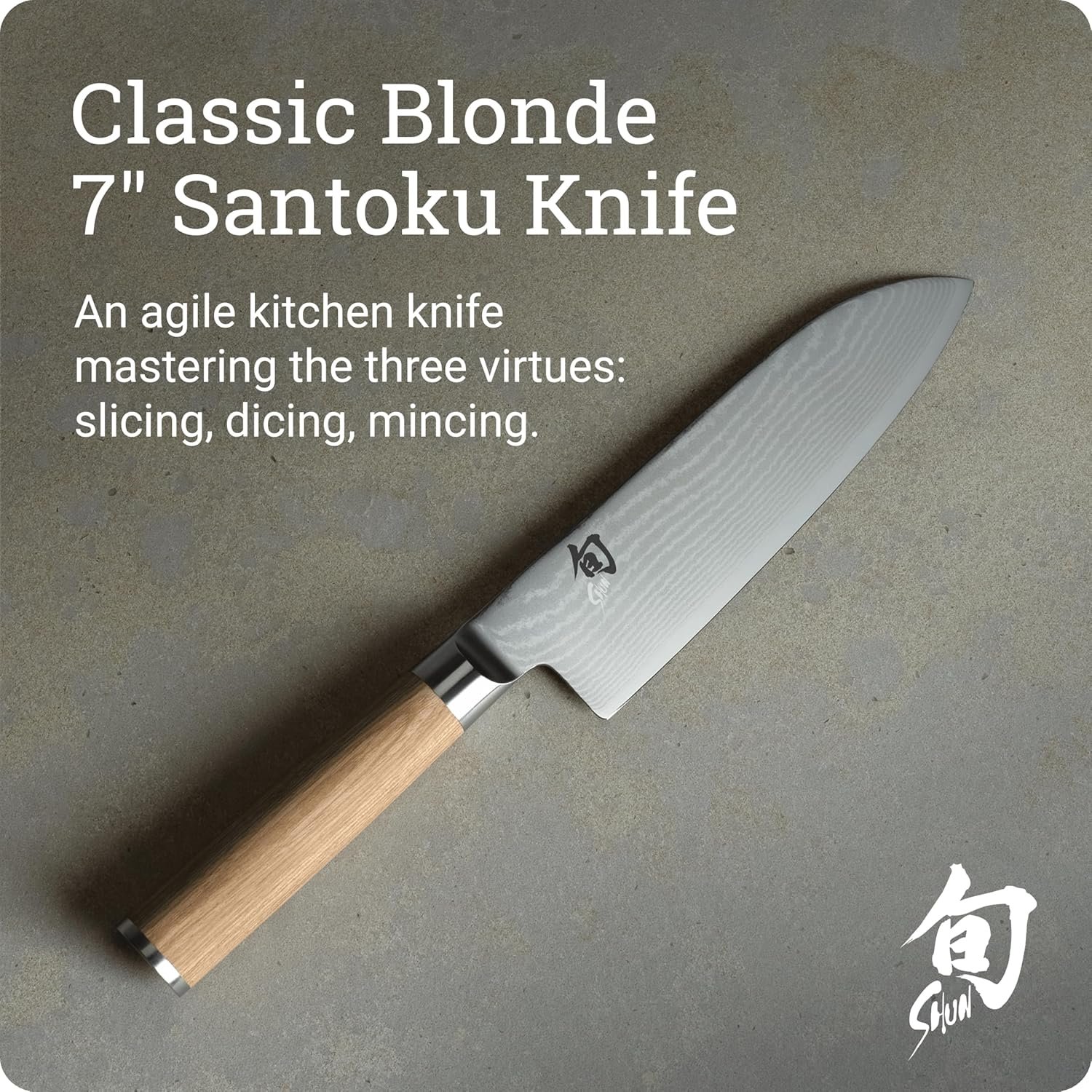
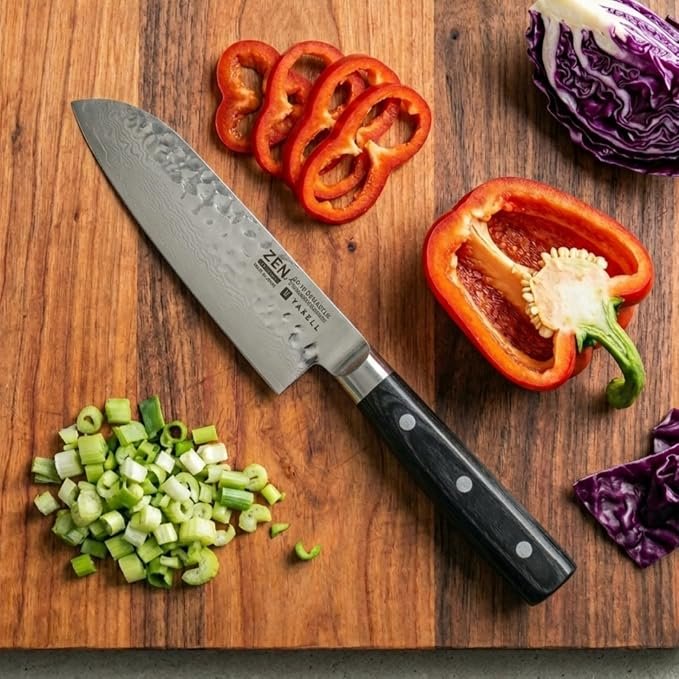
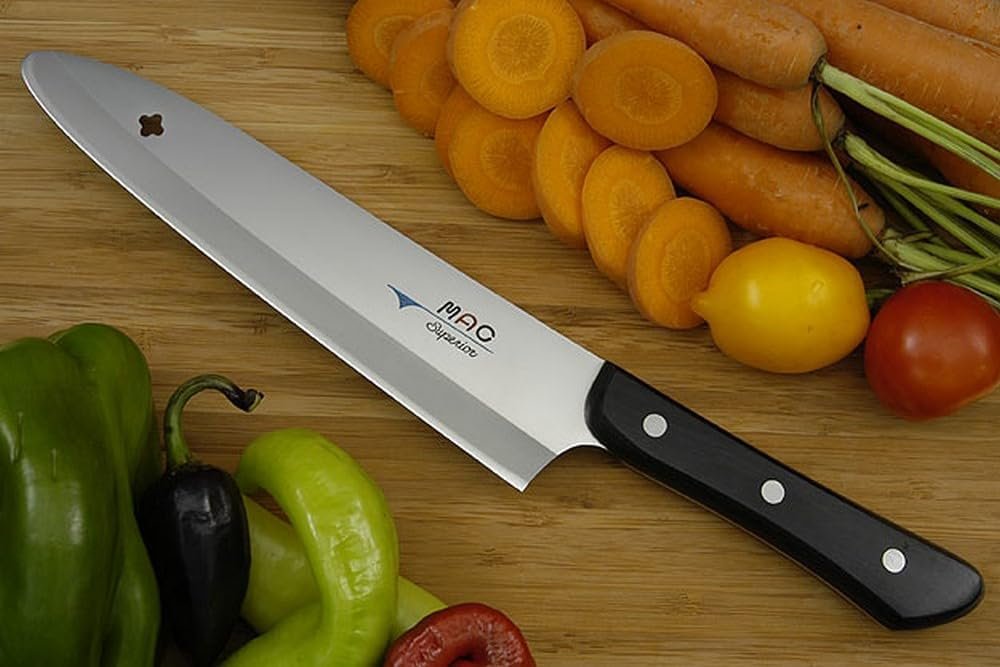
If you’re switching from a heavy German knife to your first real Japanese blade, get the MAC Superior Santoku. It’s the easiest knife here to live with day one, it’s the cheapest of the three, and it won’t punish you if your technique isn’t perfect yet. The Shun and the Yaxell are both good knives too, but they ask a little more of you. Let’s get into why.
Comparison at a Glance
| Knife | Price Range | Steel & Construction | Weight | Best For |
|---|---|---|---|---|
| Shun Classic Santoku 7″ | $130–$210 | VG-MAX core, 68-layer Damascus cladding, 16° edge | ~6.8 oz | Cooks who want a showpiece knife that still performs |
| Yaxell Zen Santoku 165mm | $140–$180 | VG-10 core, 37-layer hammered (Tsuchime) Damascus | ~7–7.5 oz | Cooks who want extra heft and a distinctive hammered look |
| MAC Superior Santoku 6.5″ | $80–$100 | Molybdenum-vanadium mono steel, sub-zero tempered | ~5.6 oz | First-timers coming from Wüsthof/Henckels-style knives |
Quick note on the weights: none of these are heavy by German standards, but the MAC is noticeably the lightest, and that matters more than it sounds like it should.
Product Reviews
Shun Classic Santoku 7-inch
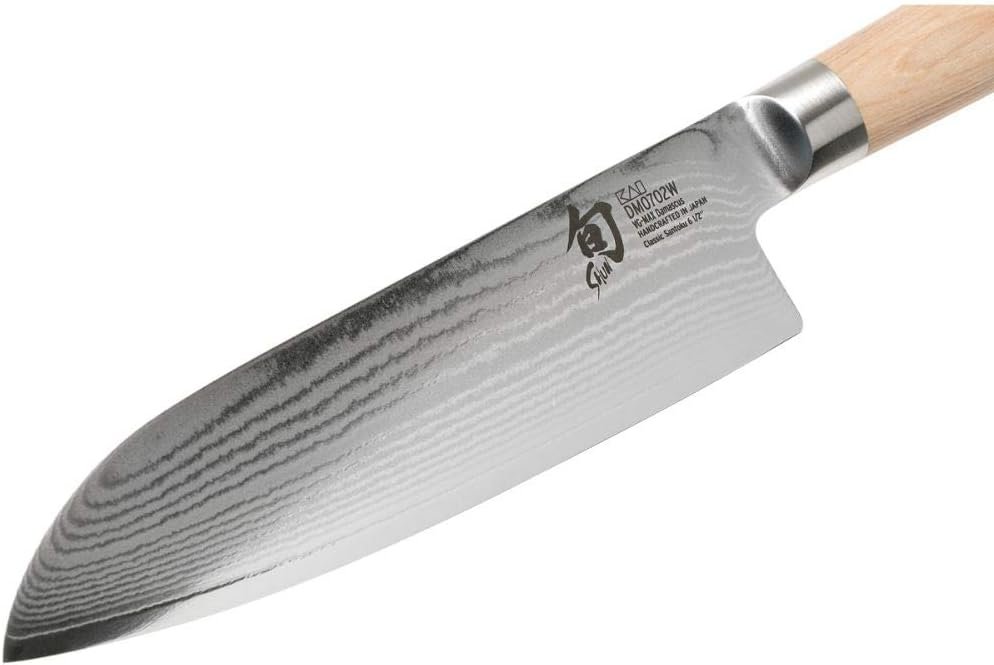
I use this one on weeknights when I’m breaking down a chicken and then moving straight into vegetables for a stir-fry. The 68-layer Damascus cladding isn’t just for looks — the hollow-ground dimples on the blade face genuinely help potato and onion slices fall away instead of sticking to the steel. And the VG-MAX steel holds an edge for a couple of weeks of regular home use before it starts to feel like it wants a strop.
But here’s the thing nobody tells you upfront: this knife runs heavier and more forward-balanced than a lot of “authentic” Japanese knives. It’s still lighter than German steel. It’s just not as feather-light as the marketing photos make you think. I learned this the hard way after using a friend’s MAC right before picking mine back up — the difference was obvious in about ten seconds.
- The 16-degree edge takes a screaming-sharp factory edge, sharper out of the box than most German knives you’ve used
- Hollow-ground dimples actually work on sticky, wet vegetables like cucumber and zucchini
- Shun’s warranty and sharpening program is legitimately good if you ever need it
- The balance sits closer to the bolster, so it feels a bit nose-heavy compared to the Yaxell and especially the MAC

Yaxell Zen Santoku 165mm
This is the knife I reach for when I want more weight doing the work for me — heavy rocking cuts through winter squash, dense root vegetables, that kind of thing. The 37-layer hammered finish isn’t just cosmetic either. The little divots from the Tsuchime hammering create tiny air pockets between the blade and whatever you’re cutting, so wet, starchy food doesn’t cling the way it does on a smooth-faced blade.
So it’s a good knife. But it’s also the one of the three that took me the longest to adjust to, coming from a German chef’s knife. The handle is thicker than Shun’s or MAC’s, and if you have smaller hands, you’ll notice it during long prep sessions.
- The hammered texture releases food nearly as well as Shun’s dimples, sometimes better on starchy vegetables
- VG-10 steel is easy to touch up on a whetstone without needing professional sharpening
- The extra heft makes it forgiving for people who still want to rock-chop like they’re used to
- The Micarta handle is chunkier than expected, and it can feel a little clubby if you have smaller hands
MAC Superior Series Santoku
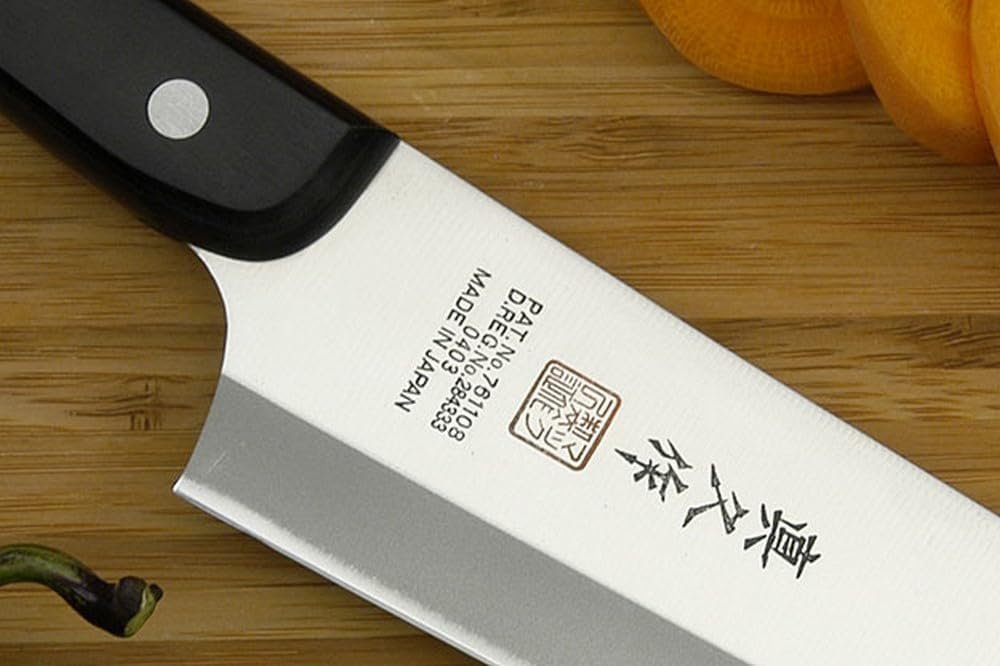
This is the one Cook’s Illustrated picked as their favorite santoku, and honestly, I get it. It’s the lightest knife in this lineup by a good margin, and that’s exactly why it’s the easiest one to hand to someone who’s only ever used a heavy Western knife. There’s no learning curve. You pick it up, and it just cuts.
The mono-steel blade doesn’t have dimples or a hammered texture, so thin slices of potato or cucumber do stick to the blade face more than on the other two. That’s the one real trade-off here. And the handle is plain black pakkawood — no Damascus pattern, nothing to show off at a dinner party. But if you’re buying a tool instead of a conversation piece, that stops mattering after the first week.
- Lightest knife of the three, which makes it the least intimidating for someone new to Japanese blades
- Molybdenum-vanadium steel sharpens up fast on a basic whetstone, no fancy sharpening service needed
- Best value here by a wide margin — you’re paying for performance, not for looks
- No dimples or hammered texture, so sticky vegetables like potato and sweet potato cling to the blade more than on the Shun or Yaxell
Which One Should You Buy?
FAQ
Is a Santoku knife better than a chef’s knife for home cooks?
Not better, just different. A Santoku’s shorter, flatter blade suits push-cutting and precision work like dicing vegetables, while a chef’s knife is built for the rocking motion most Americans already know. If you already own a good chef’s knife, a Santoku is a complement, not a replacement.
Do Japanese Santoku knives need special sharpening?
You don’t need anything exotic. A basic whetstone (1000/6000 grit combo stone is plenty) works fine on VG-10 and VG-MAX steel. What you shouldn’t do is run these through a pull-through electric sharpener made for Western knives — the edge angle is too aggressive and it’ll chew up the blade.
Why are these knives so much lighter than my German knife set?
Japanese blades are typically ground thinner behind the edge and use harder steel, so they don’t need as much mass to cut well. It takes a week or two of adjustment if you’re coming from Wüsthof or Henckels, but most people don’t want to go back once they’re used to it.
Final Thoughts
If you only remember one thing from this whole article: the MAC Superior Santoku is the safest first purchase for anyone coming from a heavy Western knife set, and it costs less than either of the other two. The Shun and the Yaxell are both excellent — the Shun edges it out on looks and food release, the Yaxell wins on heft and durability — but neither is a better starting point than the MAC if this is your first time going Japanese.
Whichever one you pick, check current pricing before you buy — all three of these bounce around by $20–30 depending on the week, and I’ve seen the MAC dip under $80 more than once.
Check the MAC Superior Santoku’s current price on Amazon →