
My 3 Picks for Americans Switching From Heavy German Knives to Japanese
This post contains Amazon affiliate links. If you buy through one, I earn a small commission at no extra cost to you. I only recommend knives I’ve actually used or would put in my own kitchen.
My 3 Picks for Americans Switching From Heavy German Knives to Japanese
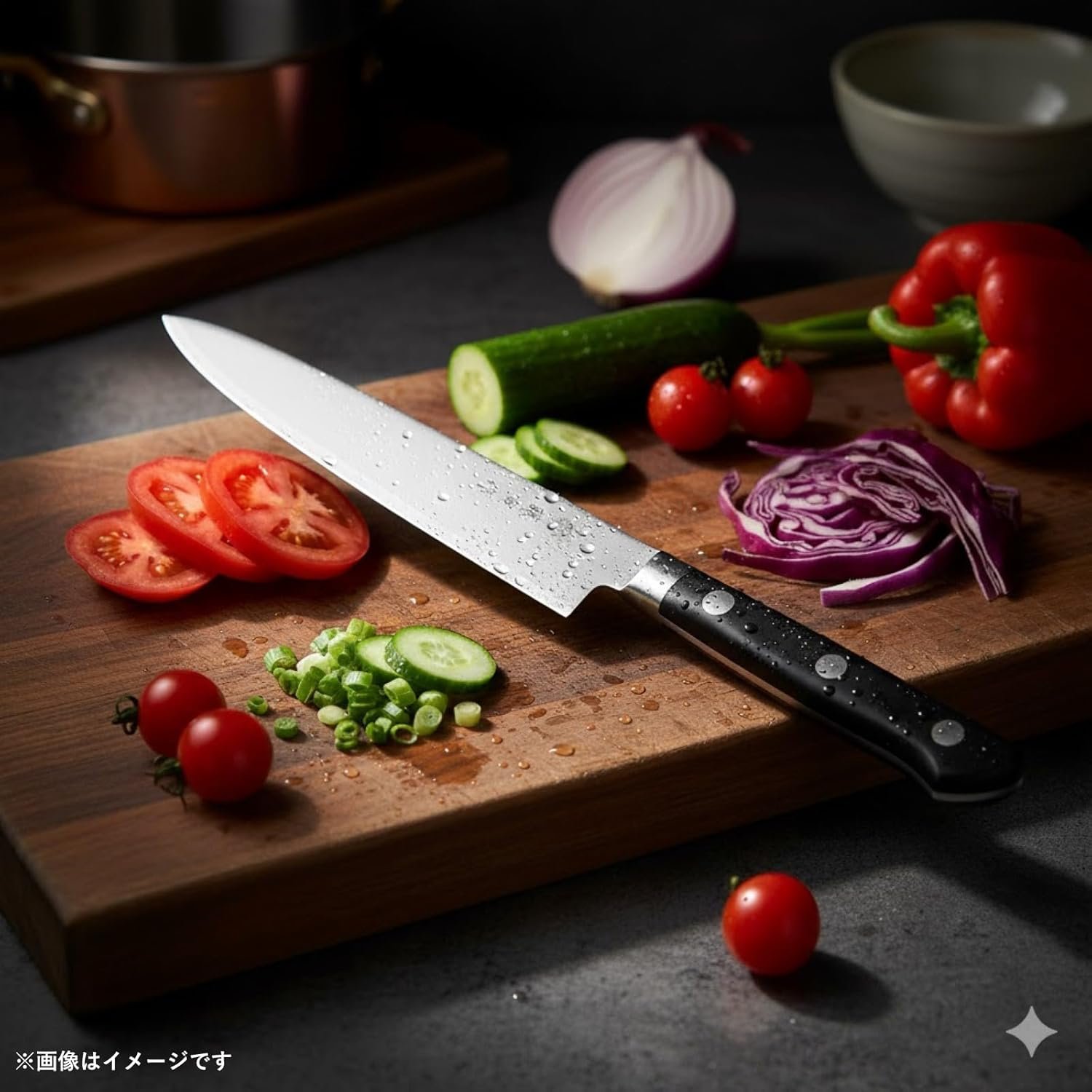
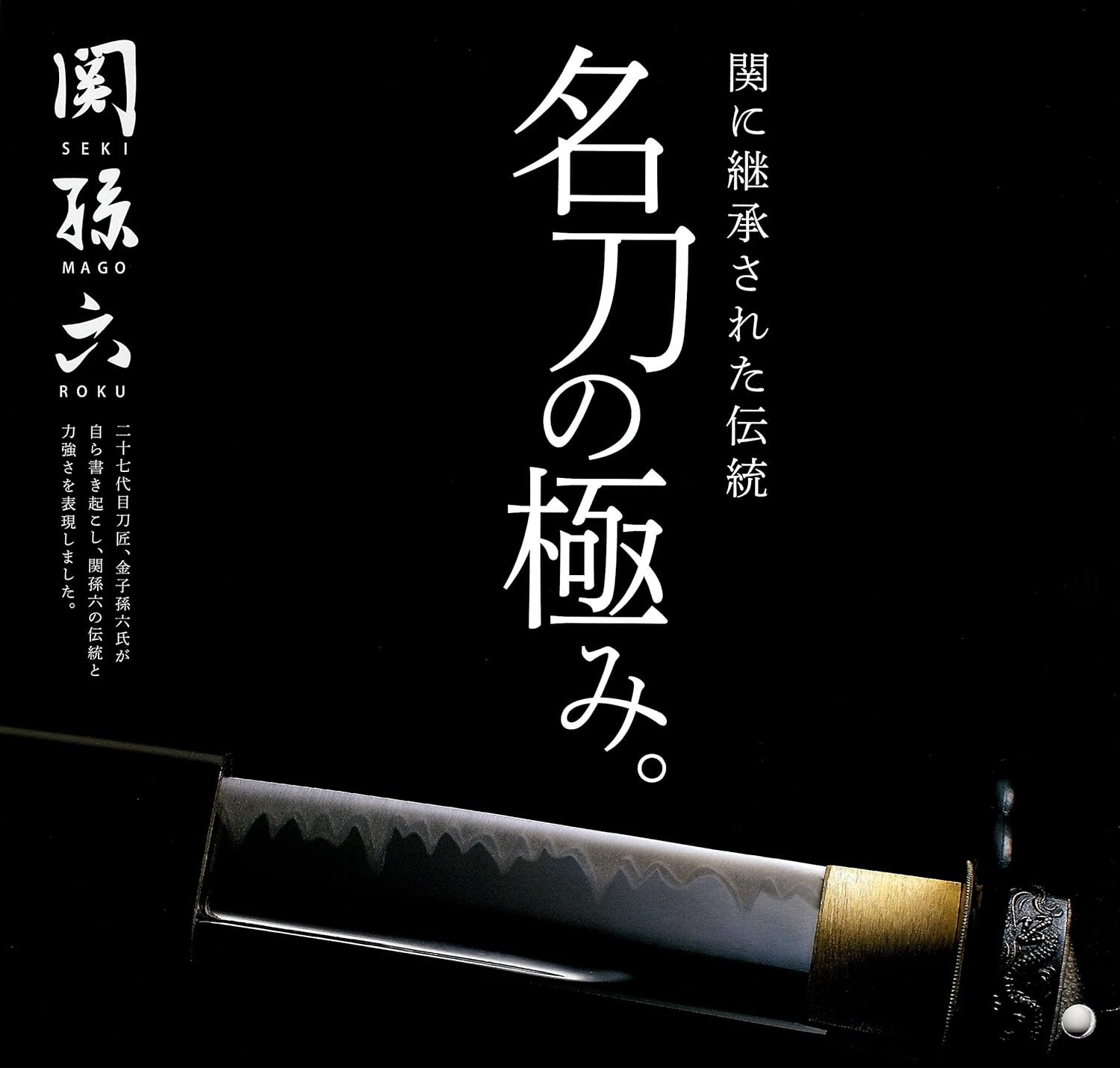
If you’ve been cutting with a Wüsthof or Henckels for years and you’re ready to try something lighter, here’s my honest answer: the Kai Seki Magoroku Damascus AE5200 is the santoku I’d tell a friend to buy first. It’s sharp out of the box, it’s not fussy, and it won’t punish you if you skip a sharpening session for a few months.
But that’s not the whole story, and I’m not going to pretend one knife covers every job in your kitchen.
I get emails constantly from home cooks who bought a single “beginner Japanese knife” and then felt stuck the first time they had to peel a mango or break down a whole cabbage. So instead of forcing three similar knives into one category, I’m giving you my actual top 3 picks — a santoku, a petty knife, and a nakiri — because that’s the trio that got me off German steel for good. They cover different jobs, and I’ll tell you exactly which one to buy first based on how you cook.
Comparison at a Glance
| Knife | Price Range | Steel & Construction | Weight | Best For |
|---|---|---|---|---|
| Kai Seki Magoroku Damascus AE5200 (Santoku, 6.5″) |
$99–$120 | 32-layer Damascus-clad stainless, VG10-style core | ~5.5 oz (155g) | Your main, everyday knife |
| Tojiro Fujitora DP FU-802 (Petty/Utility, 5.9″) |
$65–$80 | 3-layer VG10 core, cobalt alloy, 13-chrome cladding | ~2.8 oz (80g) | Small, precise, in-hand tasks |
| Global G-5 (Nakiri/Vegetable, 7″) |
$70–$100 | CROMOVA 18 stainless, hollow sand-balanced handle | Very light, no bolster | High-volume vegetable prep |
One thing I want to flag before you scroll further: the Tojiro FU-802 is a petty knife, not a santoku, and the Global G-5 is technically a nakiri (square-tip vegetable knife), not a santoku either. Some Amazon listings blur these terms because “santoku” gets more search traffic, but the shapes and jobs are genuinely different. I’m telling you this upfront because I’d rather you know exactly what’s landing on your doorstep.
Product Reviews
1. Kai Seki Magoroku Damascus AE5200 (Santoku, 6.5″)

This is the one I actually reach for on a normal Tuesday night. It’s the closest thing to an all-rounder on this list — onions, chicken breast, herbs, a block of tofu, all of it.
Real-world use case: You’re making a stir-fry and need to move fast between slicing chicken, mincing garlic, and rough-chopping bok choy without switching knives. The rounded tip and flat edge profile make rock-chopping easy, and the Damascus cladding keeps food from gumming up on the blade — mostly.
Pros
- The factory edge is genuinely sharp. I didn’t touch a whetstone for the first two months.
- At 155 grams it feels like nothing after years of a 9-ounce German chef’s knife. Your wrist will notice on day one.
- The triangular handle doesn’t roll on the counter, which matters more than you’d think when you set it down mid-prep.
Cons
- The Damascus pattern is cosmetic, not functional — don’t pay extra expecting better food release than a plain-finish blade. It still sticks to starchy stuff like sweet potato.
2. Tojiro Fujitora DP FU-802 (Petty Knife, 5.9″)
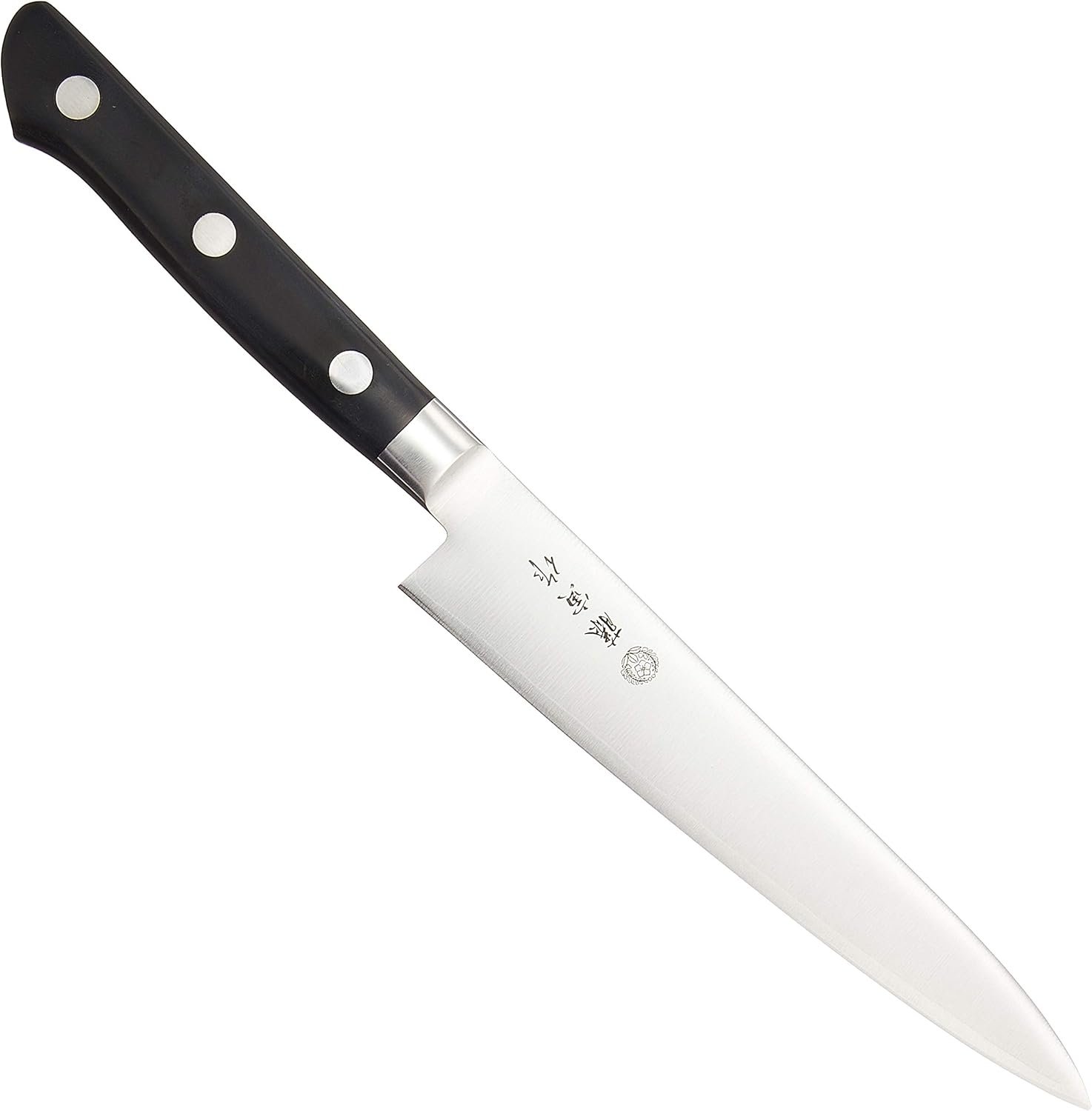
I almost left this off the list because it’s not a santoku and I didn’t want to muddy the comparison. But if you’re new to Japanese knives, this is the one that quietly becomes your most-used tool.
Real-world use case: Hulling strawberries, trimming fat off a chicken thigh, peeling a peach, cutting a lime wedge one-handed while the other hand holds the fruit. This is the knife for anything too small or too fiddly for a full-size blade.
Pros
- VG10 core holds an edge longer than the price suggests — I’ve gone six weeks of daily use before it needed a touch-up.
- Small enough to control with just your fingertips, so precision cuts (skin removal, small dice) come easier than with a santoku.
- Cheap enough that if you’re not sure Japanese knives are for you, this is a low-risk way to test the waters.
Cons
- It’s genuinely too small for anything bigger than a bell pepper. Don’t buy this as your only knife — you’ll be frustrated within a week.
3. Global G-5 (Nakiri/Vegetable Knife, 7″)
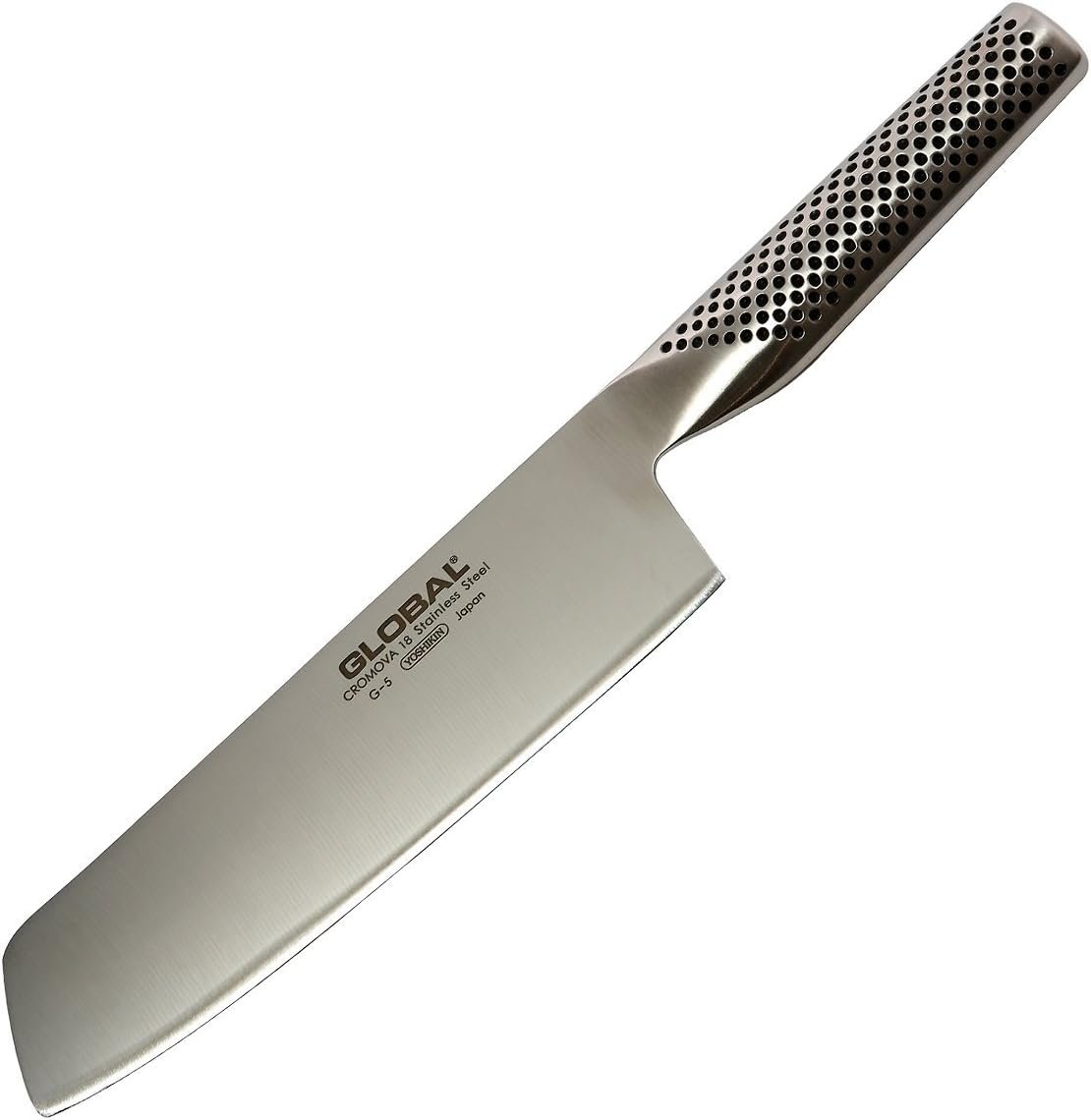
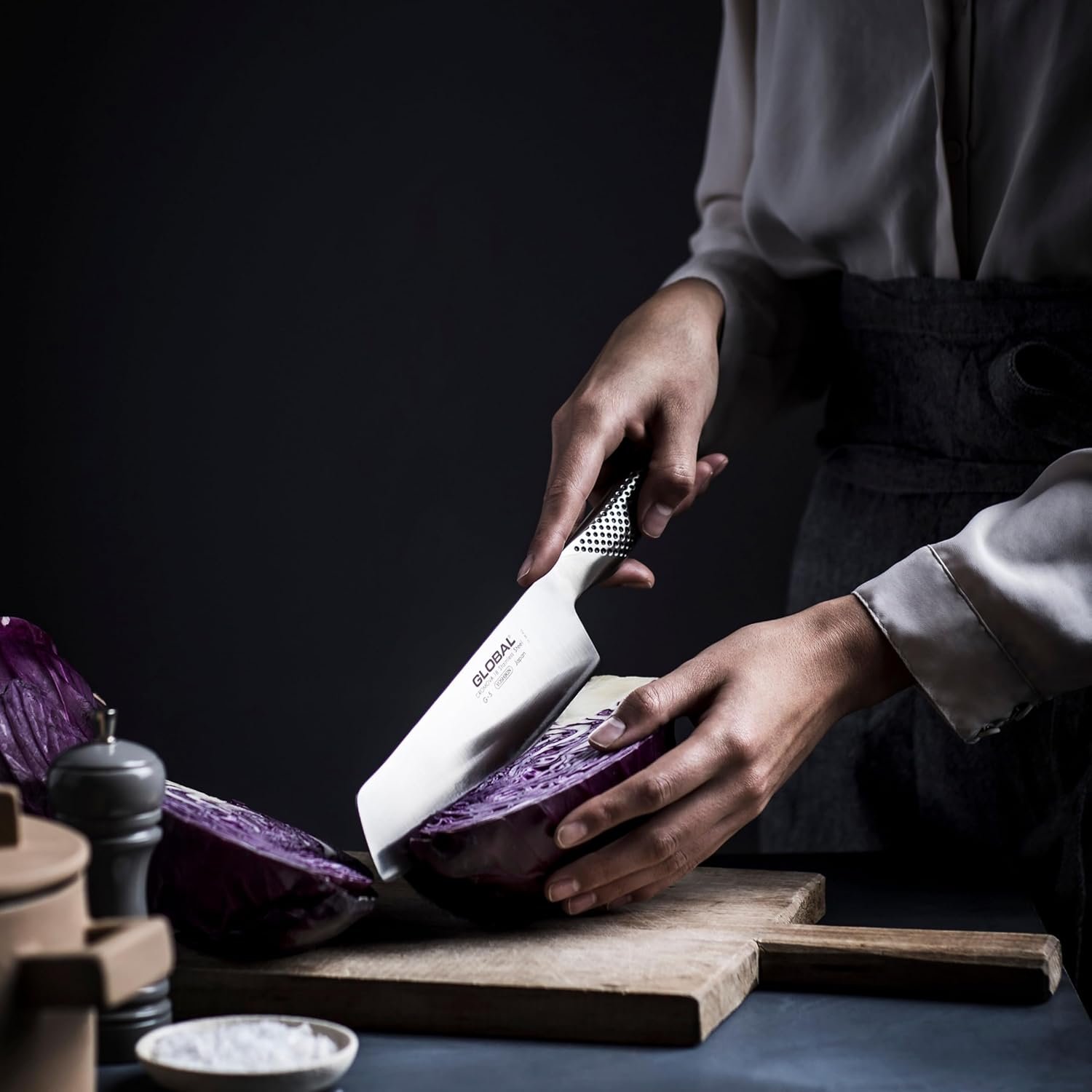
And here’s the wildcard. The G-5 looks nothing like a German knife and honestly nothing like the other two on this list either — no bolster, hollow steel handle, squared-off tip.
Real-world use case: You’re prepping a big pot of soup and need to get through two onions, a leek, three carrots, and a head of cabbage in under ten minutes. The flat edge and taller blade make this the fastest knife on the list for straight down-and-through chopping.
Pros
- The all-steel, seamless handle means there’s no crevice for gunk to collect — genuinely easier to keep clean than a wood-handled knife.
- So light that extended chopping sessions don’t tire your forearm the way a heavier knife does.
- The flat blade profile is forgiving if you’re used to pushing straight down instead of rocking a curved edge.
Cons
- I learned this the hard way: the steel handle gets slippery when your hands are wet or oily. Dry your hands before you pick it back up mid-prep.
Which One Should You Buy?
- “I want one knife that does 80% of my cooking.” Get the Kai AE5200. It’s the santoku, and santokus are built to be generalists.
- “I do a lot of fine, small work — fruit, garnish, trimming.” Add the Tojiro FU-802 as a second knife. It won’t replace your main knife, but it’ll replace your paring knife for good.
- “I cook a lot of vegetables and want speed over versatility.” The Global G-5 earns its spot. Soup bases, stir-fry veg, big batches — this is the one that saves you time.
- “I only want to buy one knife right now.” Start with the santoku. It’s the only one of the three built to handle meat, vegetables, and everything in between.
FAQ
Is a santoku better than a chef’s knife for beginners?
For most home cooks switching from a heavy German knife, yes — santokus are lighter, shorter, and easier to control with a push-cut motion. They’re not better for every task (long slicing cuts favor a gyuto), but for everyday prep, most people find them easier to adapt to.
Do Japanese knives need special sharpening?
Not special, but different. Most of these steels (VG10, CROMOVA 18) hold an edge a long time but chip more easily than German steel if you twist while cutting or hit bone. A honing rod won’t do much here — you’ll eventually want a whetstone or a pull-through ceramic sharpener rated for harder steel.
Why isn’t the Global G-5 or Tojiro FU-802 labeled correctly as santoku on Amazon?
Some sellers use “santoku” loosely because it’s a higher-traffic search term in the US market, even when the knife is actually a nakiri or petty knife. It’s worth checking blade shape and length yourself before buying — a squared tip is a nakiri, a small blade under 6 inches marketed as all-purpose is usually a petty knife.
Final Thoughts
If you only take one thing from this post: buy the Kai Seki Magoroku Damascus AE5200 first. It’s a real santoku, it’s sharp from the box, and it’s the one knife on this list that can carry your whole kitchen on its own while you decide if you want to build out the set.
Add the Tojiro petty knife when you notice yourself reaching for a paring knife more than twice a day, and grab the Global G-5 once vegetable prep starts eating up your evenings. Check current prices and availability on Amazon before you buy — Japanese knife pricing shifts more than you’d expect, especially around holidays.