
Premium Japanese Santoku Knife Comparison: Shun vs. MAC (Under $200)
Premium Japanese Santoku Knife Comparison: Shun vs. MAC (Under $200)
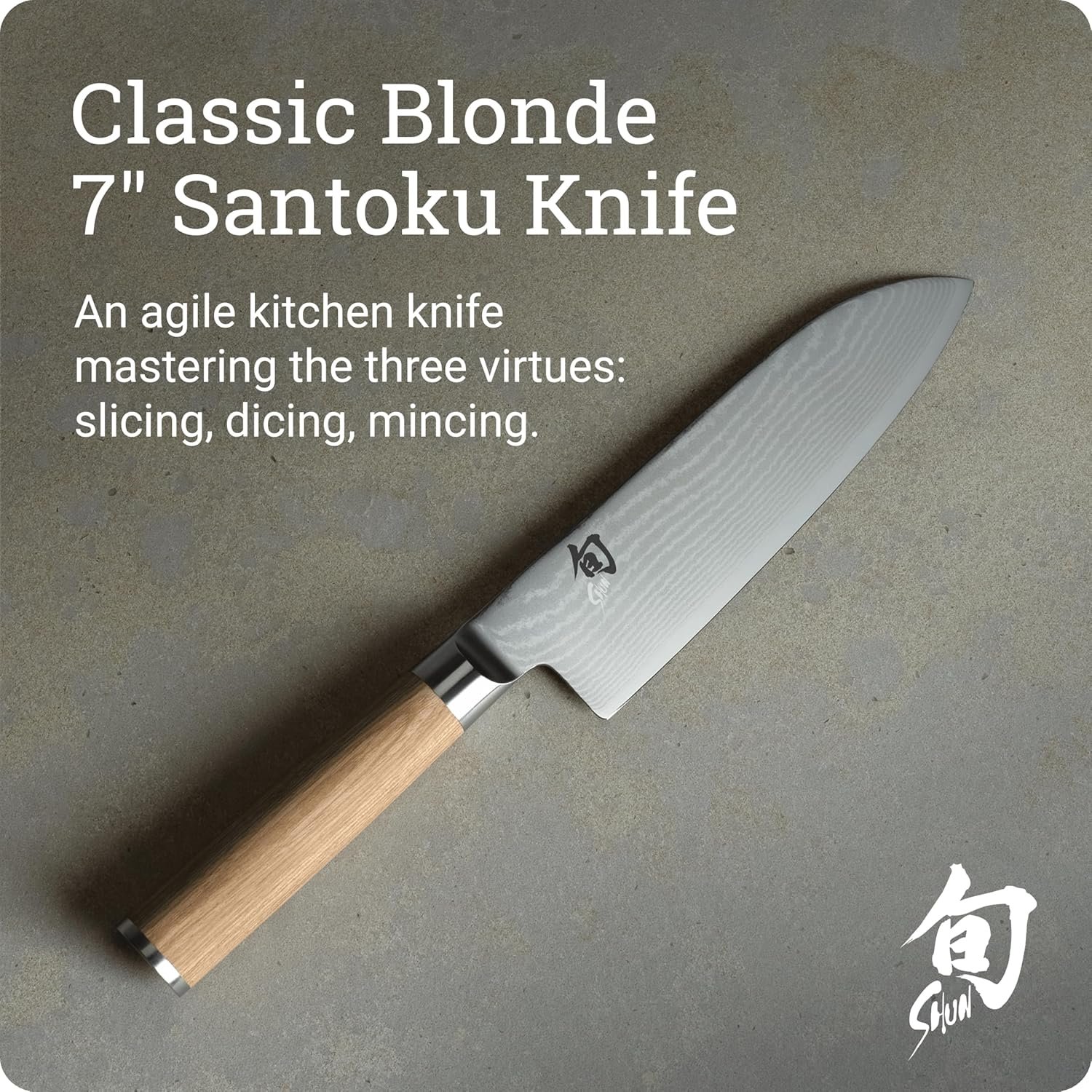
If you just want the short version: the Shun Classic 7″ Santoku is the one I hand to friends switching over from a heavy German set. It’s sharp out of the box, it looks the part on a magnetic strip, and you don’t need a sharpening stone to keep it working for the first year or so. But it’s not the only good option here, and it’s not the cheapest.
Switching from a 9-ounce Wüsthof to a Japanese knife is a bigger adjustment than most reviews let on. The blade is thinner. The edge angle is sharper. And if you’re used to rocking a heavy chef’s knife through an onion, a santoku wants a different motion entirely. I’ve put these three knives through actual weeknight cooking — not just cardboard boxes and rope — and I’ll tell you where each one falls short, because none of them are perfect.
Comparison at a Glance
| Knife | Price Range | Steel & Construction | Weight | Best For |
|---|---|---|---|---|
| Shun Classic Santoku 7″ | $130–$150 | VG-MAX core, 34-layer Damascus cladding, 60–61 HRC | ~6.8 oz | Plain edge, sharp out of the box, low maintenance |
| Shun Classic Blonde 7″ Santoku | $140–$160 | VG-MAX core, Damascus cladding, blonde Pakkawood handle | ~6.8 oz | Shun edge with a lighter, warmer-looking handle |
| MAC Superior Santoku | $100–$130 | Molybdenum vanadium stainless, 61 HRC | ~5.4–5.7 oz | Sharpest, thinnest edge of the three |
Product Reviews
Shun Classic Santoku Knife, 7-Inch
Where it shines: Sunday meal prep. Dicing three onions, a head of garlic, and a couple of bell peppers back to back without the blade dragging or the edge feeling like it’s giving up on you.
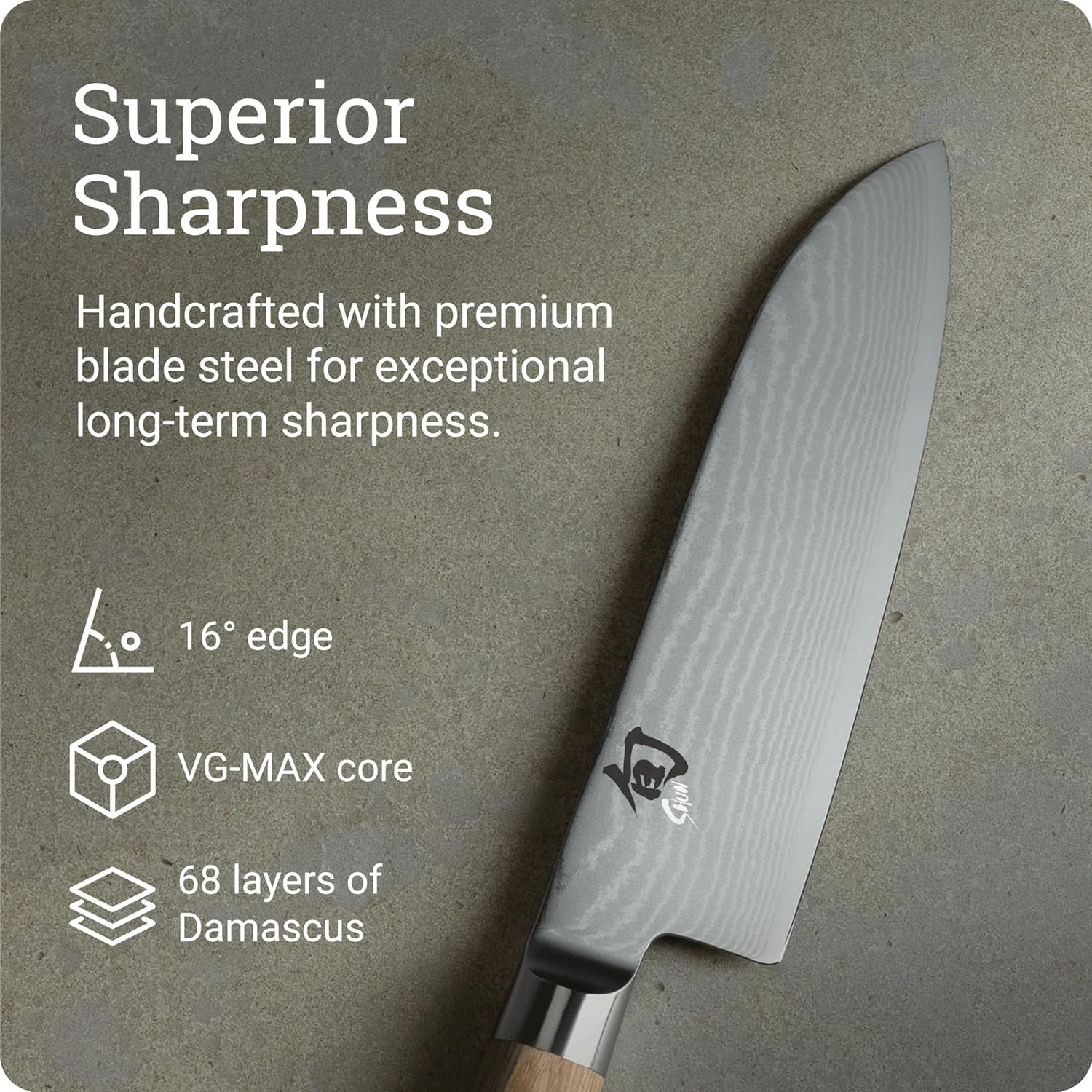
The VG-MAX steel core sits between 60 and 61 on the Rockwell scale, which is harder than most German knives but not so hard it chips if you’re careless with a bone-in chicken thigh. Shun grinds the edge to about 16 degrees per side, so it bites into a tomato skin without any sawing. And the Damascus cladding isn’t just for looks — it does help thin-sliced onion release from the blade a little better than a flat-sided knife would.
Pros
- Comes shaving-sharp right out of the box. No initial sharpening needed.
- The pinch grip and D-shaped handle fit most hand sizes without feeling like a chore after 20 minutes of prep.
- Holds an edge for months of regular home use before it needs a touch-up on a whetstone.
Con: The handle is dark Pakkawood, and honestly, food debris and light water spots show up on it faster than I expected. I learned this the hard way after leaving it in the drying rack overnight instead of hand-drying it right away — a little rust bloom showed up near the bolster. Nothing a Bar Keepers Friend pass didn’t fix, but it was a reminder that “stainless” doesn’t mean “ignore it.”
One more thing worth mentioning: the blade has a slight curve to it, not a dead-straight edge like some traditionalists expect from a santoku. That’s actually a plus for most home cooks. It lets you rock the knife a little, the way you would with a Western chef’s knife, instead of forcing a strict up-and-down chop the whole time. So the learning curve here is shorter than you’d think.
Shun Classic Blonde 7″ Santoku Knife
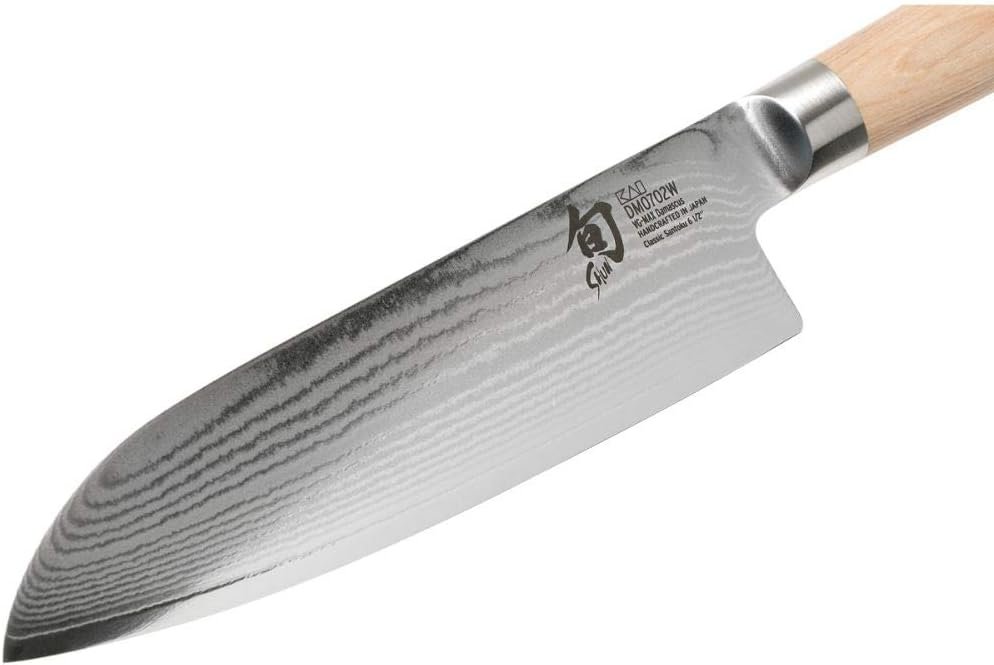
Where it shines: Same kitchen tasks as the standard Classic, but this one’s for people who want their knife block to look a little brighter — the blonde Pakkawood handle photographs better and shows up warmer under kitchen lighting, if that matters to you.
Mechanically, this is the same knife. Same VG-MAX core, same 34-layer Damascus cladding, same 16-degree edge. So everything I said about the standard Classic’s cutting performance applies here too. I’ve used both side by side on the same cutting board, and I honestly couldn’t tell a difference in how they handled a julienne of carrots.
Pros
- Identical steel and edge geometry to the standard Classic, so you’re not paying more for a worse knife.
- The lighter handle shows knife-block wear less obviously than the dark version, oddly enough.
- Same low-maintenance edge retention — I went about 10 weeks of near-daily use before it needed a strop.
Con: You’re paying a small premium for a color option. If the aesthetic doesn’t matter to you, the standard Classic usually runs a few dollars cheaper for the exact same performance.
MAC Knife Superior Series Santoku
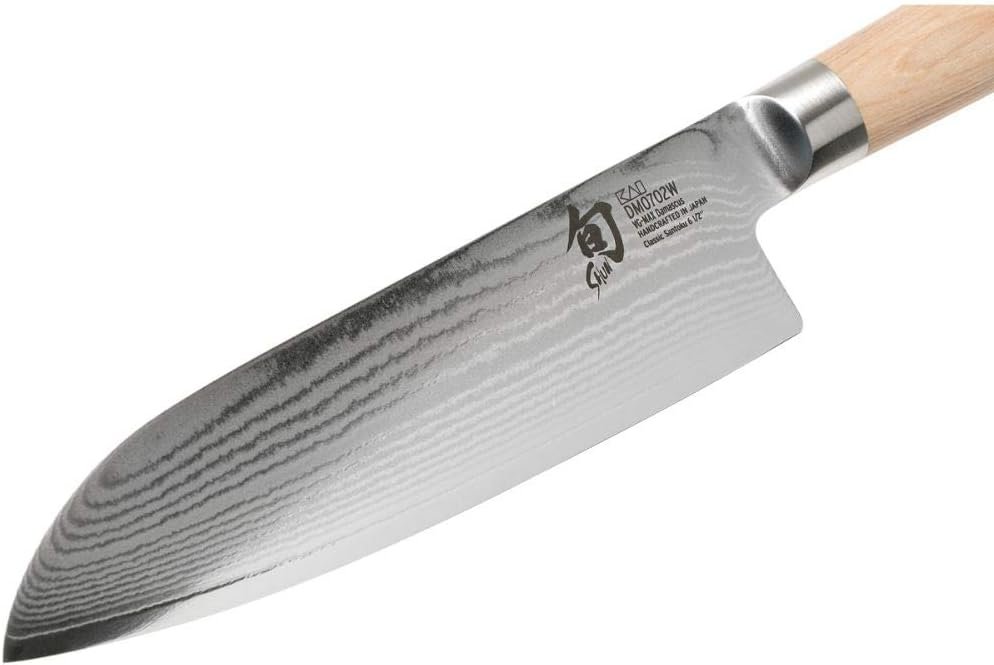
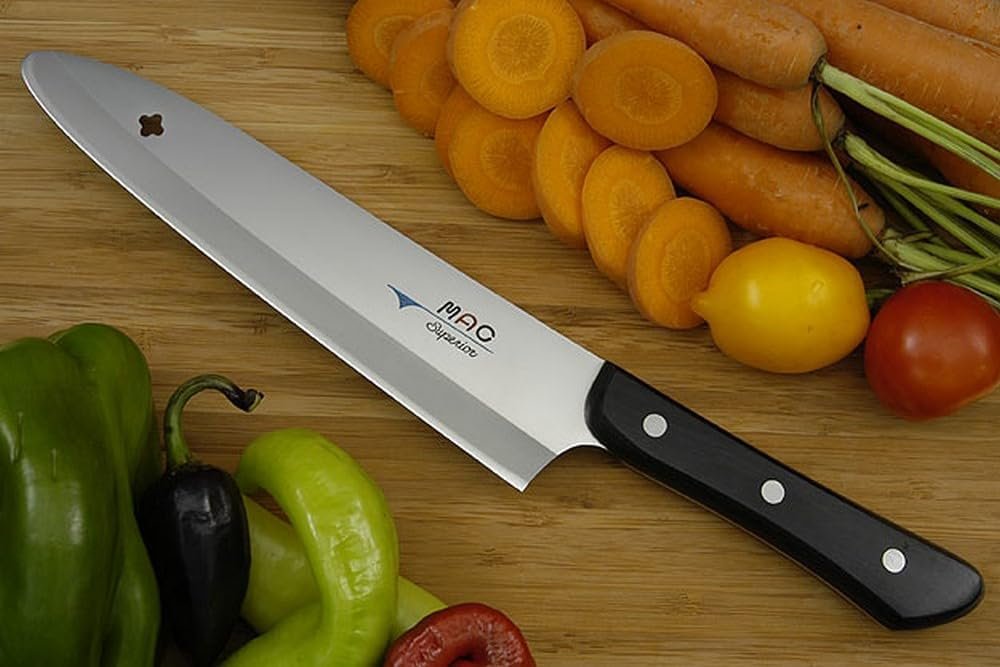
Where it shines: Fast prep when you need thin, even slices of raw fish, cucumber, or daikon. This one bit into a ripe tomato skin the first time I tried it without any pressure at all. It’s the thinnest blade of the three, and you can feel it.
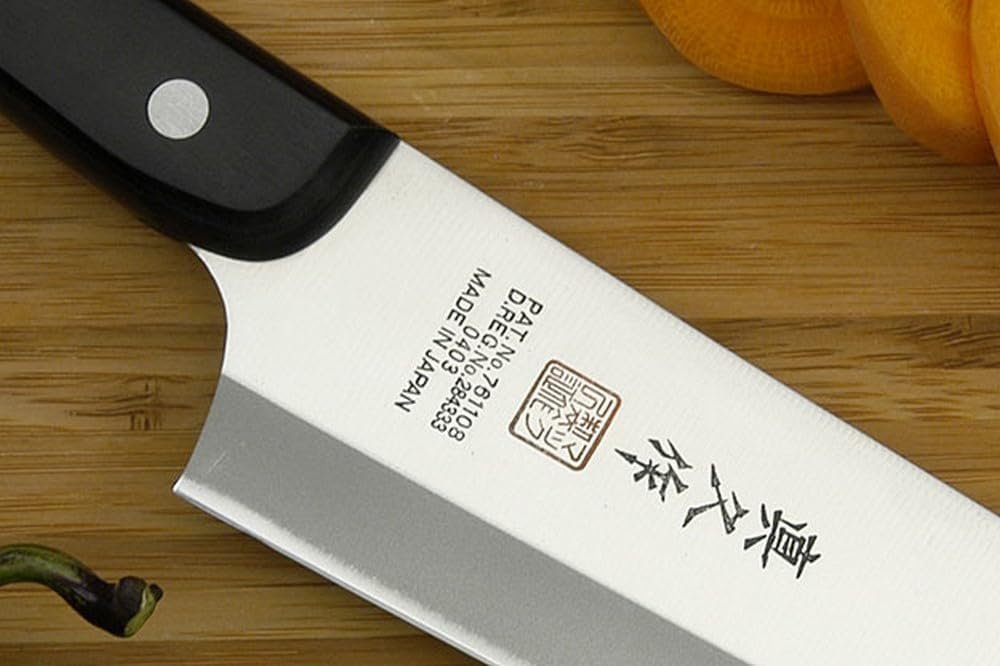
MAC uses a molybdenum vanadium stainless alloy instead of Shun’s Damascus-clad VG-MAX, and it’s put through a sub-zero tempering process that pushes the hardness to around 61 HRC. It’s a plain, single-material blade with no dimples or hollow grinding, so food does grab onto the sides more than it does on the Shun. On the plus side, it’s lighter in hand — noticeably so if you’re prepping for more than 20 minutes at a stretch.
Pros
- Thinnest, most precise edge of the three — great for delicate slicing work.
- Lighter overall weight makes it easier on the wrist during long prep sessions.
- Costs less than either Shun option while matching them on hardness and sharpness.
Con: Sticky food. Cucumber, sweet potato, and thin-sliced onion all cling to the blade more than they do on the Shun, so you’ll be tapping the flat of the knife against the board more often to knock food loose. It’s a plain blade with no dimples, and it shows.
The handle is a plainer black Pakkawood too, nothing fancy, no bolster to speak of. If you’re buying a knife partly for how it looks on display, this isn’t it. But if you just want performance for the money, that plainness is basically the trade-off you’re making, and it’s a fair one.
Which One Should You Buy?
FAQ
Is a Santoku knife better than a Chef’s knife for home cooking?
Not objectively better, just different. A santoku’s flatter edge and shorter blade suit push-cutting and precision work like dicing vegetables. If you do a lot of rock-chopping or need to break down whole proteins, a Gyuto or Western chef’s knife will feel more natural.
Do I need a special cutting board for these knives?
Yes, and this matters more than most reviews mention. Stick to wood or soft plastic boards. Glass, granite, or stone boards will chip the edge on any of these three knives within weeks, no matter how careful you are.
How often do these knives need sharpening?
With regular home use — a few times a week — expect to strop or hone every couple of weeks and do a full sharpening on a whetstone every 4 to 6 months. All three knives hold an edge longer than a typical Western knife, but none of them are maintenance-free forever. A ceramic honing rod works better than a steel one on these harder Japanese blades, by the way. A steel rod can actually chip the edge if you’re not careful.
Final Thoughts
For most home cooks making the jump from heavy Western knives, the Shun Classic Santoku 7″ is still the safest buy. It’s sharp from day one, forgiving of a slightly awkward learning curve, and it looks good enough to leave out on the counter. If budget is the deciding factor, or you want the sharpest possible edge and don’t mind a bit of food sticking, grab the MAC Superior instead — you’ll save some money and lose almost nothing in performance.
Whichever one you land on, check current pricing before you buy. All three knives move in and out of sales fairly often on Amazon, and the price gap between them can shrink to almost nothing during a good week.
Ready to upgrade your kitchen knife?
Check the Shun Classic Santoku 7″ price on Amazon