
Top Rated Japanese Santoku Knives Reviewed
Disclosure: This post contains Amazon affiliate links. If you buy through one, I earn a small commission at no extra cost to you. I only recommend knives I’ve actually used and would buy again.
Top Rated Japanese Santoku Knives Reviewed
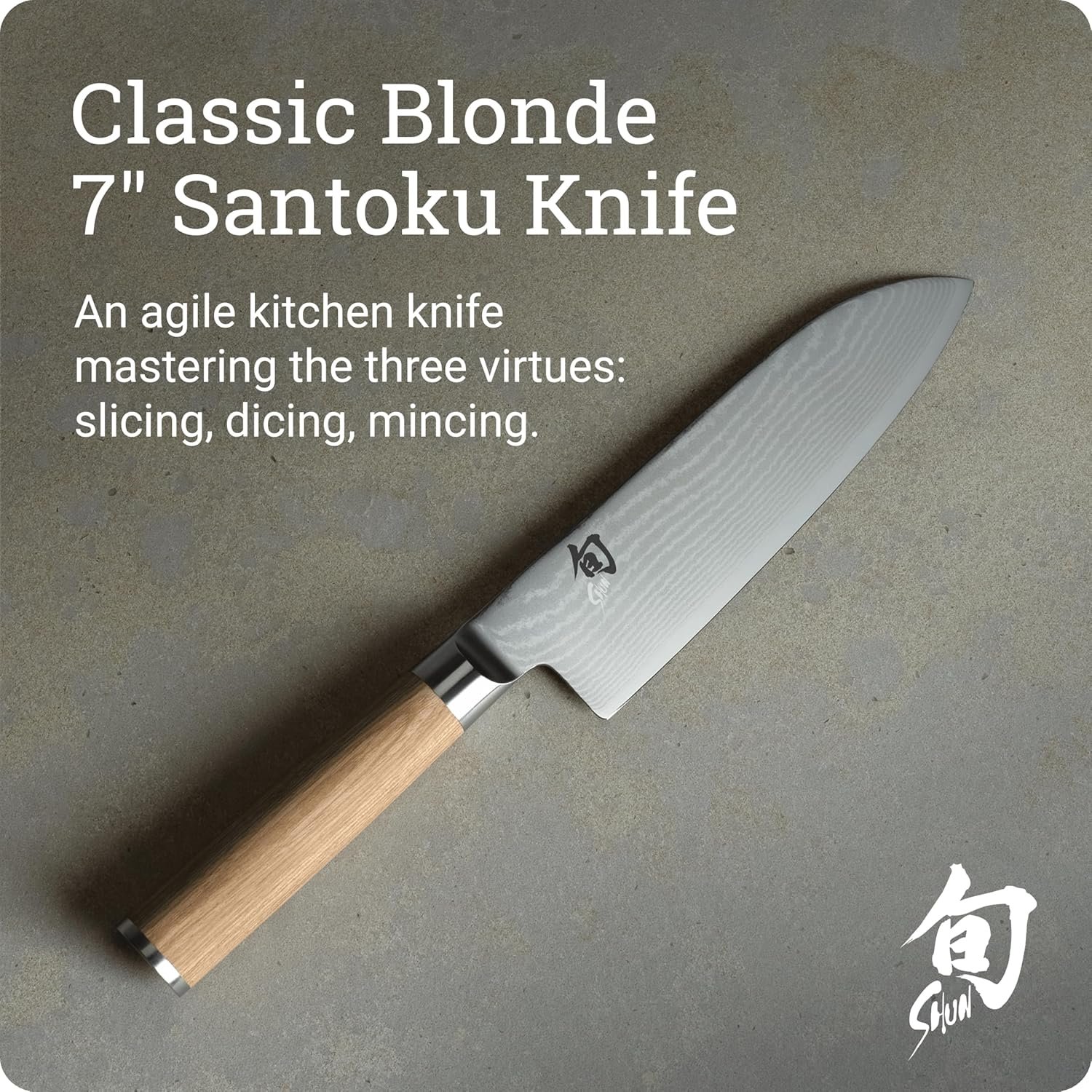
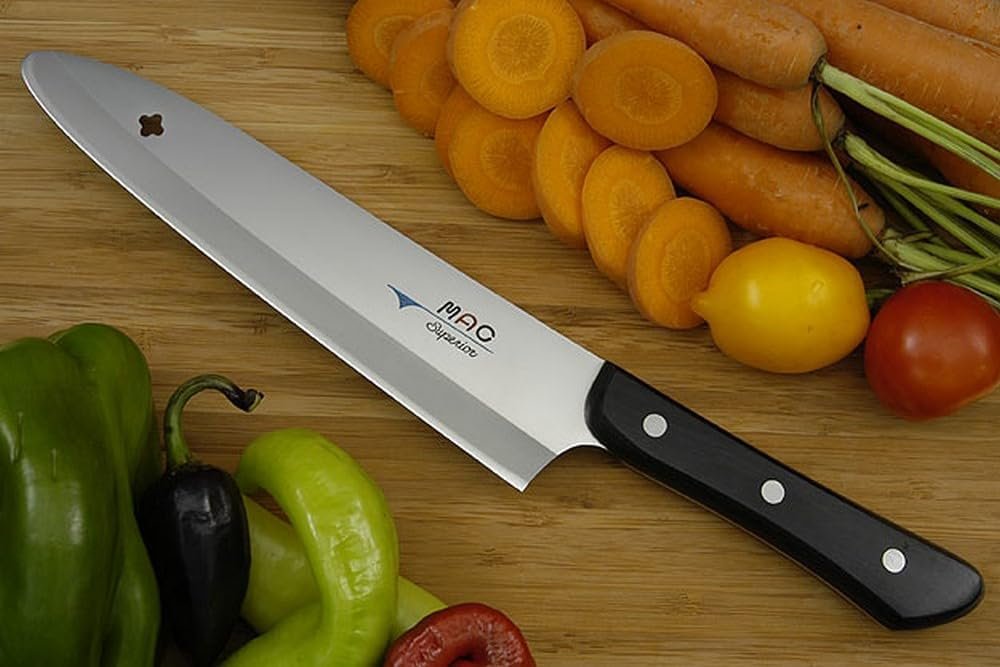
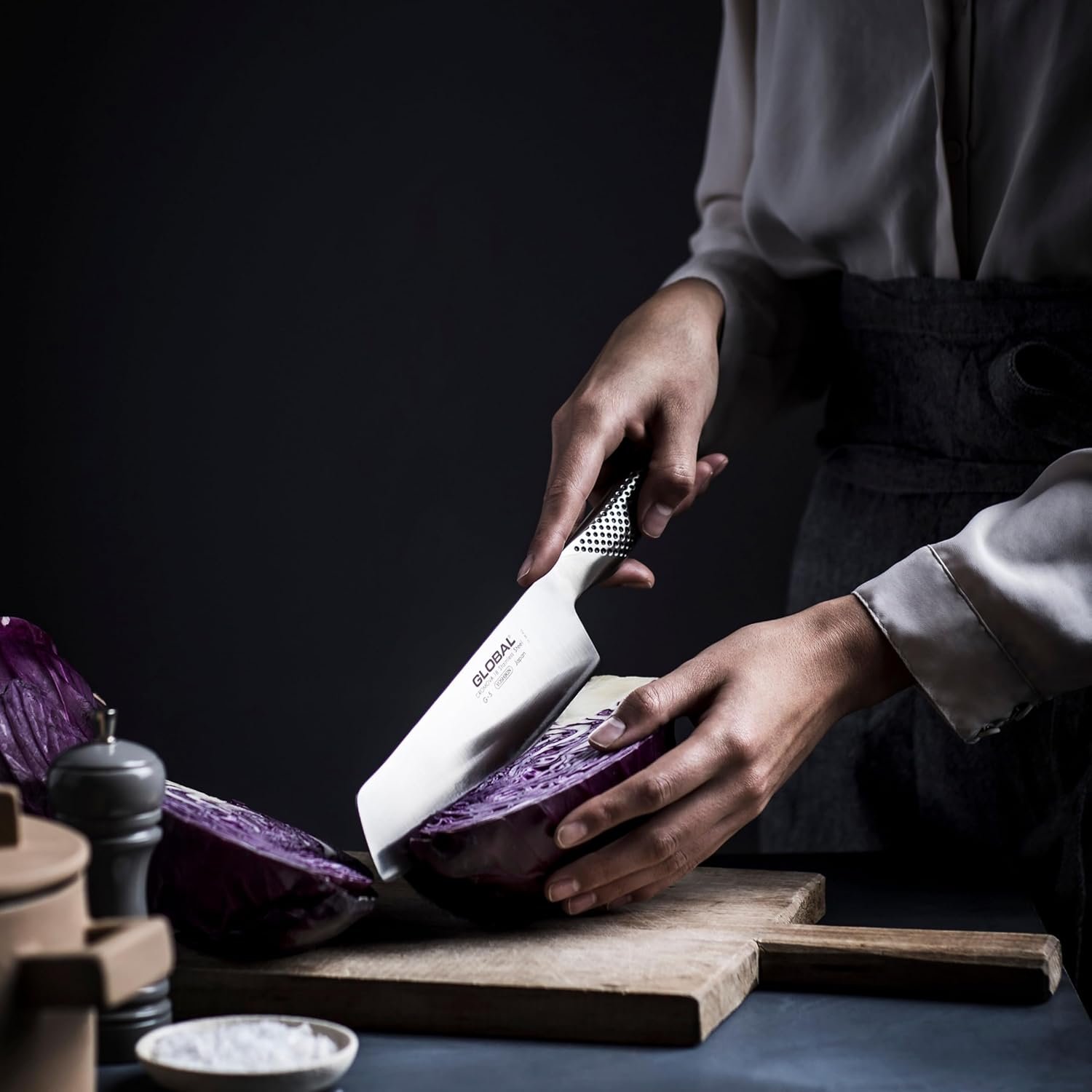
If you want the short answer: get the Shun Classic Santoku. It’s the easiest knife on this list to switch to if you’ve been cutting with a German blade your whole life, and it holds an edge better than anything else near its price. But it’s not the right call for everyone, so let’s get into why.
I spent years hacking away with a heavy Wüsthof before I ever picked up a Japanese knife, and honestly, the first week was rough. Everything felt too light. Too thin. Like it might snap if I looked at it wrong. It didn’t. And once my hands adjusted, I couldn’t go back. If you’re standing in that same spot right now, staring at a wall of unfamiliar Japanese names and wondering which one won’t leave you disappointed, this guide is for you.
I tested three knives that show up again and again in the sub-$200 range: the Shun Classic Santoku, the MAC Superior Santoku, and the Global G-5. They’re not identical tools, and that’s kind of the point. Each one solves a slightly different problem.
Comparison at a Glance
| Knife | Price Range | Steel & Features | Weight | Best For |
|---|---|---|---|---|
| Shun Classic Santoku 7″ | ~$140–$180 | VG-MAX core, 34-layer Damascus cladding, 60–61 HRC, hollow-ground dimples | ~6.3–6.8 oz | First-timers coming from heavy German knives |
| MAC Superior Santoku 6.5″ | ~$80–$100 | Molybdenum-vanadium mono steel, sub-zero tempered, thin taper | ~5.6–6 oz | Budget-conscious cooks who still want serious sharpness |
| Global G-5 Vegetable Knife 7″ | ~$140–$160 | CROMOVA 18 stainless, 56–58 HRC, one-piece construction, sand-weighted handle | ~5 oz | People who want the lightest, most low-maintenance option |
A quick note before we go further: the Global G-5 is technically a Nakiri-style vegetable knife, not a true curved Santoku. It gets lumped into Santoku roundups constantly because it fills the same role in the kitchen. I’m including it because a lot of readers land on this page comparing exactly these three knives, but I’ll be upfront about the difference below.
Product Reviews
Shun Classic Santoku 7″
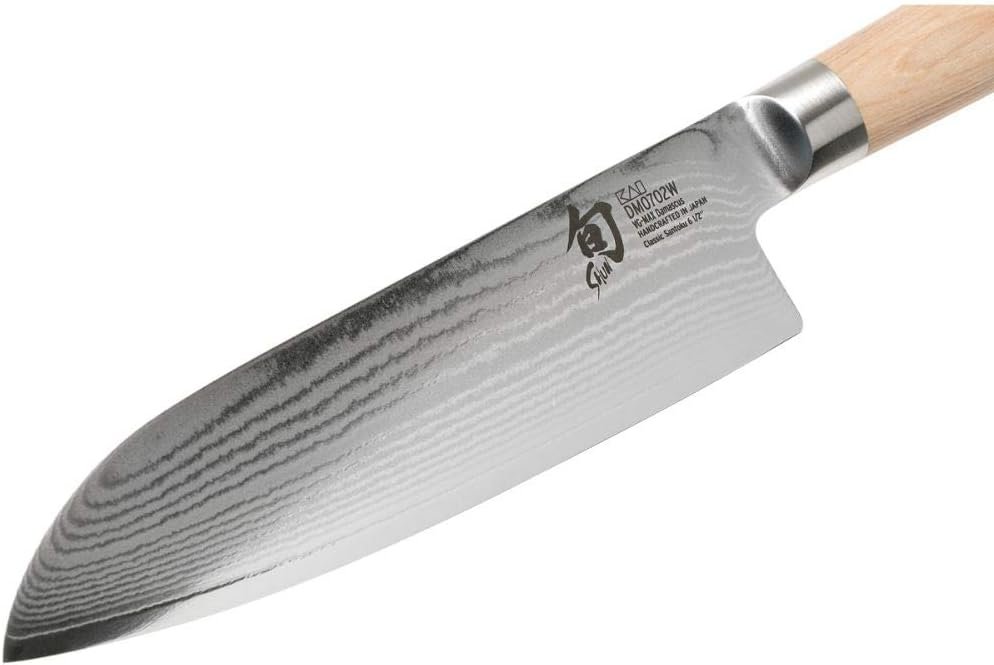
Real-world use: This is the knife I hand to friends who say they’re “not really a cook” but want one good blade. I used it almost daily for breaking down chickens, dicing onions, and slicing tomatoes for a summer of BLTs, and it never once needed a touch-up in between sharpenings.
The VG-MAX steel core is sandwiched between 34 layers of Damascus cladding on each side, and it’s hardened to 60–61 on the Rockwell scale. That’s harder than most German steel, which is exactly why it holds an edge so much longer. The hollow-ground dimples along the blade do real work too. Wet potato slices don’t stick and pile up on the blade the way they do on a plain-edge knife.
Pros:
- Edge retention is the best of the three. I went about six weeks of regular home use before I felt any dulling.
- The handle shape and slight heft feel familiar if you’re used to a Western knife. It’s the least jarring transition on this list.
- The dimples genuinely reduce food sticking on starchy vegetables like potatoes and squash.
Cons:
- It’s the heaviest of the three, and if you have small hands or wrist issues, a full afternoon of prep can leave you tired. I noticed it myself after a big holiday cooking session.
MAC Superior Santoku 6.5″
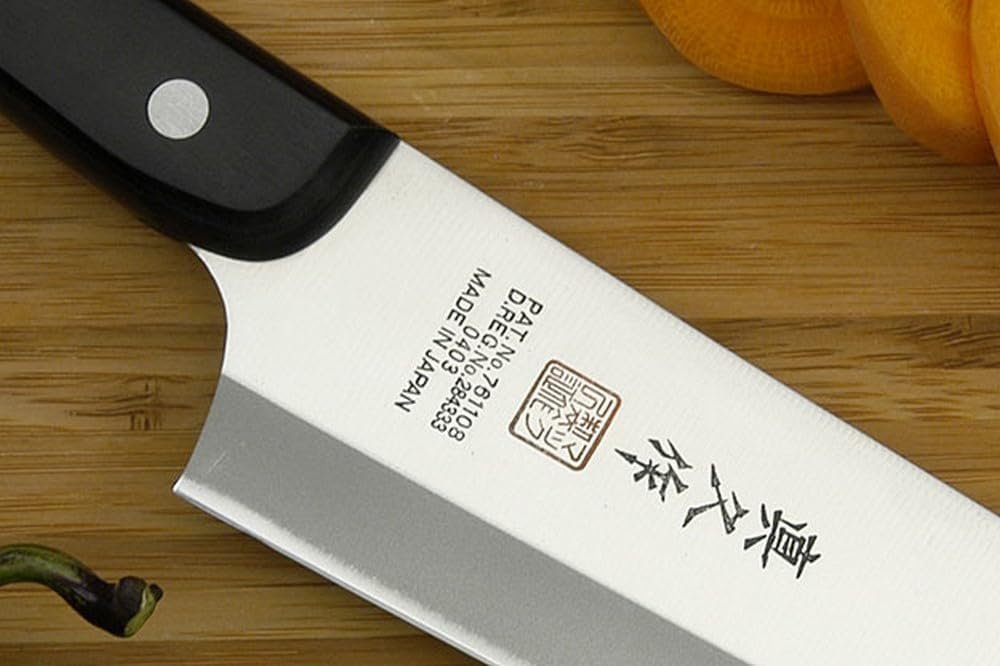
Real-world use: I bought this one on a recommendation from a line cook friend who swears by MAC for value, and I get why now. It’s the knife I grab when I just need to get through a mountain of vegetables fast, no ceremony.
The blade is a single piece of molybdenum-vanadium steel that’s been sub-zero tempered, which is MAC’s way of squeezing extra hardness and edge stability out of a relatively affordable alloy. It’s also thinner behind the edge than the Shun, so it slices through carrots and cucumbers with less resistance. You feel the difference immediately if you go back and forth between the two.
Pros:
- Best sharpness-to-price ratio here, and it’s not close. You’re getting most of what a $200 knife offers for under $100.
- The thin blade profile makes push-cuts through dense vegetables noticeably easier on your hand and wrist.
- Light enough for long prep sessions without fatigue.
Cons:
- The plain wood handle and stainless bolster don’t have the same visual polish as the Shun. It looks like a working tool, because it is one. If you care about how a knife looks on your counter, this might bug you.
Global G-5 Vegetable Knife 7″
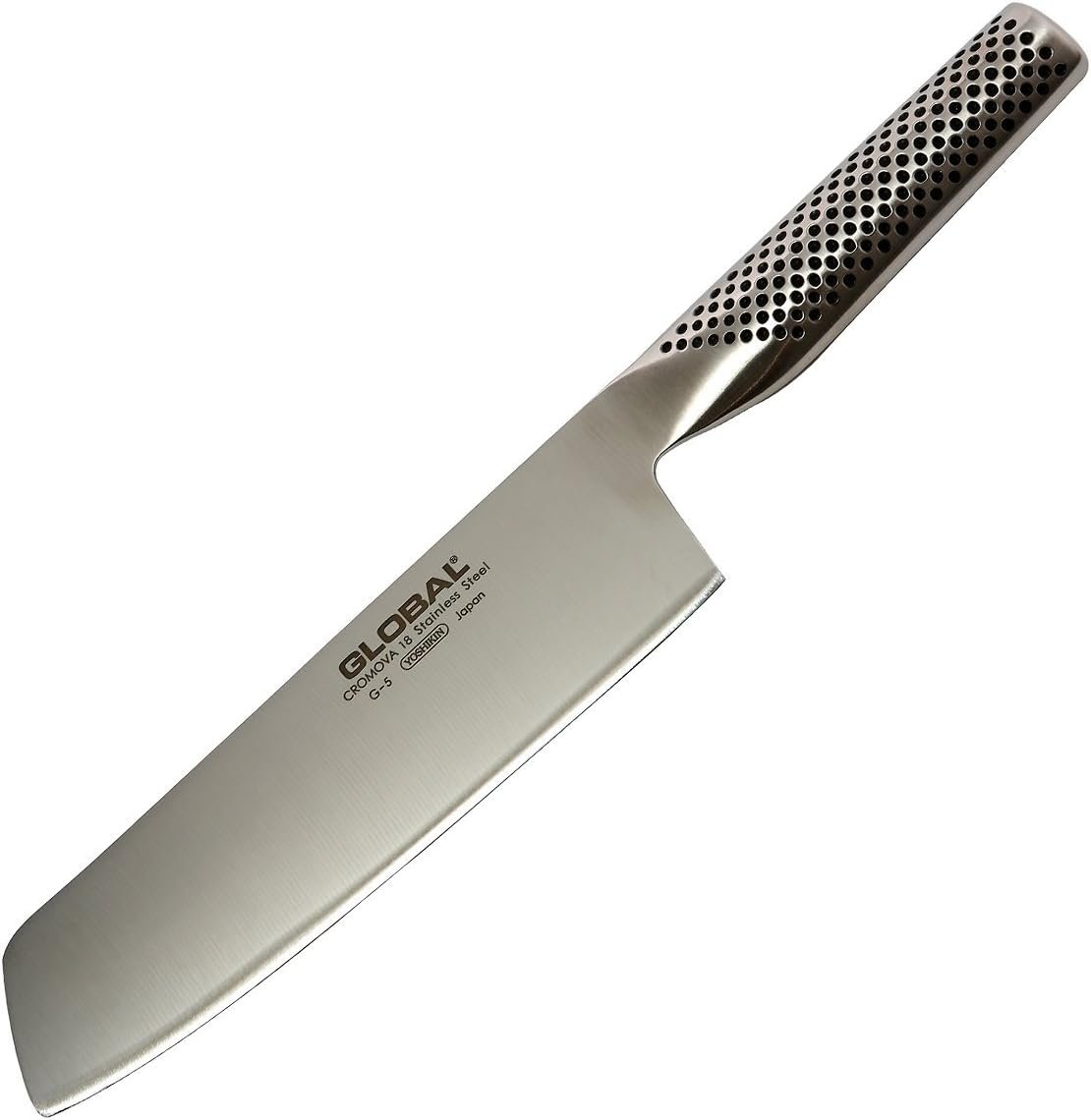
Real-world use: This is the one I reach for when I want to mince garlic or ginger fast and don’t want to think about balance at all. The sand-weighted handle puts the center of gravity right where your fingers naturally land, so there’s zero break-in period.
But I’ll say it again: this is a straight-edged Nakiri-style knife, not a curved rocking Santoku. If you’re used to rocking a chef’s knife back and forth on the cutting board, you’ll need to switch to more of an up-and-down chopping motion here. I learned this the hard way the first time I tried to mince parsley with it out of habit and ended up with uneven cuts until I adjusted my technique.
Also worth flagging: unlike the Shun, the G-5’s blade itself doesn’t have dimples or hollow-ground indentations. Global relies on the convex grind alone for food release, and it’s noticeably less effective on sticky stuff like sweet potato or beet slices, which cling to the flat sides more than they do on the Shun.
Pros:
- The lightest knife on this list by a good margin, which makes it easy on your wrist during long chopping sessions.
- The one-piece steel-and-handle construction means no crevices for gunk to hide in. Cleanup takes seconds.
- CROMOVA 18 steel resists rust and staining better than the other two, so it’s forgiving if you’re not perfect about drying it right away.
Cons:
- No dimples on the blade means sticky vegetables clump up more than they should. You’ll be scraping the blade with your knuckle more often than with the Shun.
Which One Should You Buy?
- Coming straight from a heavy German knife and want the smallest adjustment period? Get the Shun Classic Santoku. It’s familiar enough that you won’t feel like you’re relearning how to cook, and the edge retention means you won’t be sharpening constantly while you adjust.
- Want serious Japanese sharpness but don’t want to spend $150+? The MAC Superior is the value pick. It cuts nearly as well as the Shun for a lot less money, and I’d argue it’s the better daily driver if looks don’t matter to you.
- Prep vegetables constantly and want the lightest possible knife? Go with the Global G-5, but budget a week to adjust your technique since it doesn’t rock like a traditional Santoku.
- Small hands, wrist issues, or you tire out fast during prep? Skip the Shun’s extra weight and go MAC or Global instead.
FAQ
Do Japanese Santoku knives need to be hand washed?
Yes, all three of these should be hand washed and dried immediately. Dishwashers are rough on Japanese steel and can dull the edge or damage the handle over time, especially on the Shun’s Pakkawood handle.
What’s the real difference between a Santoku and a Nakiri?
A Santoku has a slight curve near the tip that lets you rock the blade like a chef’s knife. A Nakiri, like the Global G-5 here, has a completely flat edge meant for straight up-and-down chopping. Both handle vegetables well, but the technique is different.
How often do these knives need sharpening?
With home use a few times a week, expect to hone before each use and get a proper sharpening every two to three months. The Shun’s harder steel stretches that a bit longer than the MAC or Global.
Final Thoughts
Of the three, the Shun Classic Santoku is still the one I’d recommend first if you’re making the jump from German knives and only want to buy one knife this year. It holds an edge the longest, feels the most familiar in hand, and the dimples actually solve the food-sticking problem the Global doesn’t. If budget is tight, the MAC Superior gets you 90% of the performance for a lot less cash. Either way, check current pricing before you buy since these fluctuate.