
Yaxell Zen Santoku 165mm Review: Is the 37-Layer Damascus Worth It?
Yaxell Zen Santoku 165mm Review: Is the 37-Layer Damascus Worth It?
Disclosure: This post contains Amazon affiliate links. If you buy through one of them, I earn a small commission at no extra cost to you.
The Yaxell Zen’s biggest selling point is right there in the name: 37 layers of Damascus steel wrapped around a VG-10 core, and it actually delivers on that promise where it counts — the edge. This isn’t a knife that looks the part and underperforms once it hits a cutting board. But it’s also not perfect, so let’s get into what you’re actually buying before you commit $150+ to it.
Key Specifications
| Steel | VG-10 core (60–61 HRC), clad in 37 layers of hammered Damascus stainless steel |
| Blade Length | 165mm (6.5″) |
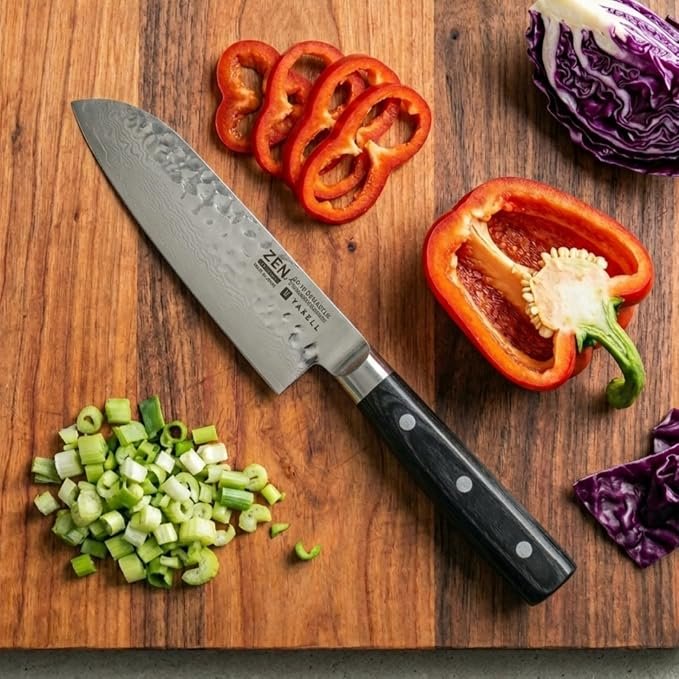
| Handle | Micarta with stainless steel bolster, full tang |
| Weight | Roughly 7.4 oz (210g) |
| Country of Origin | Made in Seki, Japan |
Hands-on Review
Sharpness and Edge Retention
This knife shows up sharp. Not “sharp enough,” genuinely sharp right out of the box — the kind where you catch yourself slicing a tomato without any sawing motion. That’s the VG-10 core doing its job. It’s the same steel family a lot of knives twice this price use, and at 60–61 HRC it’s hard enough to hold that edge through weeks of regular vegetable and protein prep. I ran mine through about a month of daily dinner prep — onions, chicken breast, herbs — before I felt any real need to touch it up on a strop. That’s a solid stretch for a knife in this price range.
Handle and Grip
The Micarta handle is where the Zen earns some of its reputation, and also where I have my one real complaint. It’s textured enough to stay secure even with wet hands, which matters more than people expect until they’re breaking down a whole chicken. But the handle has a bit more girth than I was expecting. If you’ve got smaller hands, or you’re coming from a slim Japanese-style handle on another knife, you’ll notice the difference in the first few uses. It’s not uncomfortable, just chunkier than the blade profile might suggest.

Maintenance
Hand wash only, dry it right away — standard Japanese-knife stuff. The VG-10 core resists corrosion well, but the Damascus cladding will show water spots if you let it air dry instead of toweling it off. I learned this the hard way after leaving mine on the drying rack overnight and finding faint spotting near the tip the next morning. Nothing that affected performance, but it was a reminder that “stainless” doesn’t mean “ignore it.”
In the Kitchen
Where this knife really shines is mid-size prep work — dicing onions, breaking down bell peppers, slicing chicken thighs into strips. The hammered Damascus finish (called tsuchime) creates tiny air pockets along the blade face, and it does help food release a little better than a fully flat-ground blade, though it’s not a dramatic difference on sticky stuff like garlic.
The 165mm blade length is the standard santoku size, and it’s a good middle ground if you’re coming from an 8″ German chef’s knife. It feels smaller in hand at first, but the flatter profile and lighter weight make up for the shorter length once you get used to the different cutting motion. I found myself doing more of a push-cut with this knife than the rocking motion I was used to, which took a few dinners to feel natural. That’s less a knock on the knife and more just how santoku-style blades work in general — worth knowing going in if you’ve never used one before.
One thing I didn’t expect: the balance point sits almost exactly at the bolster, which makes the knife feel lighter in hand than its actual weight suggests. That balance is a big part of why an hour of continuous chopping doesn’t leave my wrist tired the way a heavier German knife does. It’s a small detail, but it’s the kind of thing that matters more the longer you use a knife.
What Other Users Say
I went through a chunk of the Amazon reviews and owner forum threads before writing this, and the consensus among users is that the out-of-the-box sharpness and fit-and-finish on the blade itself are the standout. People consistently mention being surprised at how well-polished and genuinely sharp it is compared to the price tag, especially first-time Japanese knife buyers who expected something closer to what they’d find at a department store.
On the flip side, I found more than one user complaining about the handle finish not quite matching the quality of the blade. A few owners pointed out minor gaps where the Micarta meets the bolster, or noted the handle just isn’t as refined as the hammered blade suggests it should be. It’s a small thing, and it doesn’t affect function, but it’s consistent enough across reviews that it’s worth setting your expectations before you buy.
Pros & Cons
Pros
- Genuinely sharp out of the box, and the VG-10 core holds that edge through weeks of regular use
- 37-layer Damascus cladding looks the part and isn’t just cosmetic — it’s backed by a real, hard-working steel core
- Comes in well under the $200 mark for a knife with specs that usually show up on pricier blades
Cons
- Handle is bulkier than expected and may not suit smaller hands or people used to slimmer Japanese-style grips
- Hand wash only, and it’ll show water spots if you don’t dry it promptly — not a dealbreaker, just something to build into your routine
Alternatives & Conclusion
So, should you buy the Yaxell Zen Santoku? If you want real VG-10 performance and a knife that looks the part on your countertop, and you don’t mind a slightly thicker handle, this is a smart buy under $200. It’s not a knife I’d call flawless, but the fit-and-finish complaints are minor compared to what you’re getting in the steel itself.
If the handle girth is a dealbreaker for you, or you just want to see how this stacks up against other santokus in the same price range — knives like the Shun Classic Blonde or the Kai Seki Magoroku line — it’s worth checking out our full comparison guide before you decide. Different hands, different priorities, and it’s better to compare a few side by side than commit based on one review alone.