
Best Santoku Knife for Design and Performance: Shun vs. Kai vs. Global
Best Santoku Knife for Design and Performance: Shun vs. Kai vs. Global
Disclosure: This post contains Amazon affiliate links. If you buy something through one of these links, I earn a small commission at no extra cost to you. I only recommend knives I’ve actually used and would buy again.
If you’re switching from a heavy German-style chef’s knife and want something lighter and sharper, get the Shun Classic Blonde 7″ Santoku. It’s the easiest jump for someone used to bulky Wüsthof or Henckels blades, and it doesn’t punish you for the transition. But it’s not the only option, and it’s not cheap, so let’s look at what else is out there before you spend $130+ on a knife.
I’ve cooked with all three knives below for months, not just unboxed them and taken photos. So this isn’t a “top picks” list scraped from spec sheets. It’s what actually held up at my cutting board.
And I get why the switch feels intimidating. German knives are heavy for a reason — they’re built to power through bone and dense produce with brute force. Japanese blades ask you to trust the edge instead of the weight, which takes a week or two to feel natural. So the three knives below aren’t just “good santokus.” I picked them specifically because each one solves the transition differently: one is the safe, balanced choice, one is the low-risk budget option, and one solves a specific annoyance (food sticking to the blade) that German knives never really had to deal with in the first place.
Comparison at a Glance
| Knife | Price Range | Steel & Construction | Weight | Best For |
|---|---|---|---|---|
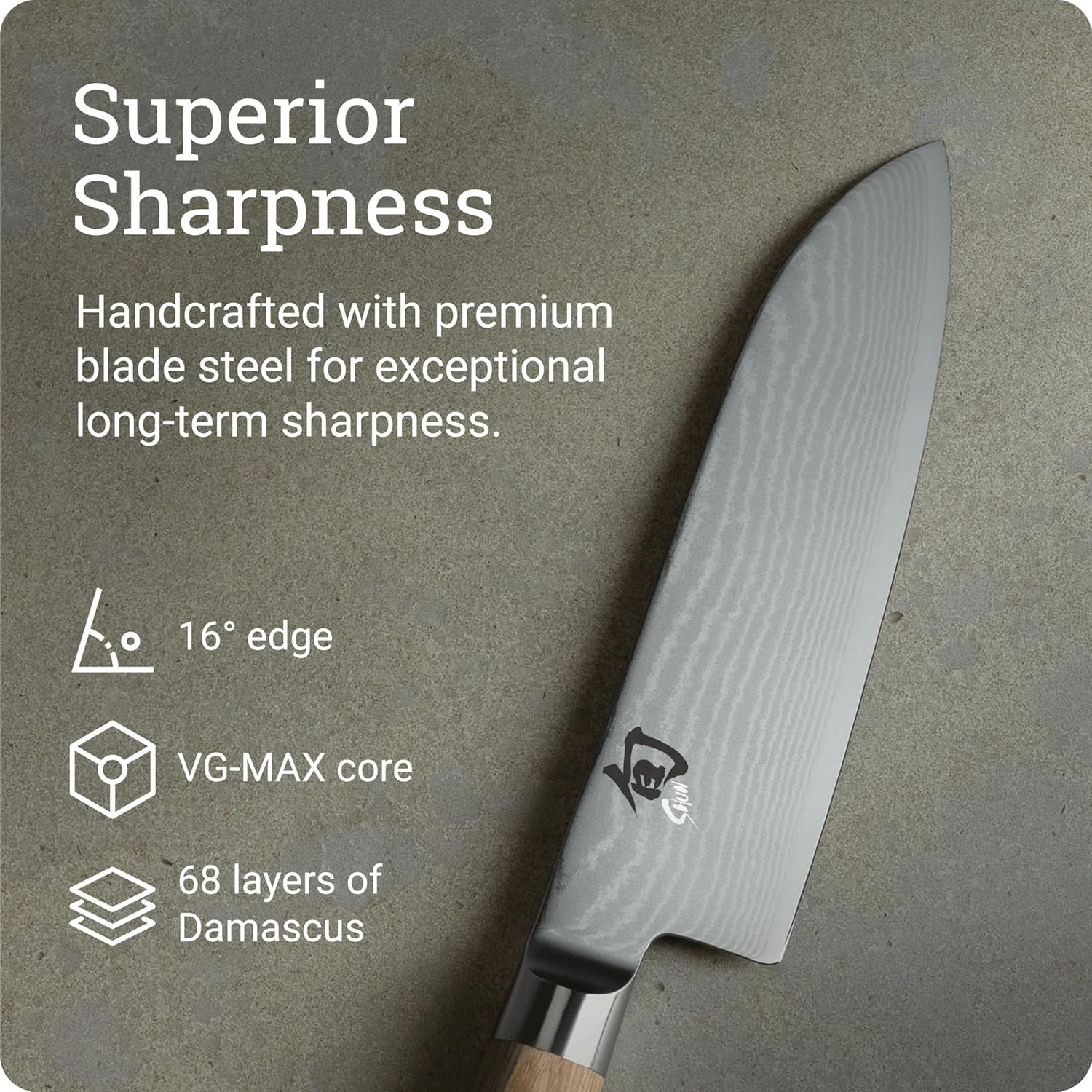
| Shun Classic Blonde 7″ Santoku | $130–$150 | VG-MAX core, 68-layer Damascus cladding, 16° edge | 7.2 oz (204g) | First-time santoku buyers who want a “safe,” well-balanced upgrade |
| Kai Seki Magoroku AE5200 6.5″ Santoku | $70–$100 | Damascus-clad stainless, composite wood handle | ~5.5 oz (155g) | Budget-conscious cooks who still want a real Japanese blade |
| Global G-2 8″ Chef’s Knife | $100–$130 | CROMOVA 18 stainless, 15–17° double bevel | ~6 oz (170g) | People who want the lightest possible knife and don’t mind sharpening more often |
Product Reviews
Shun Classic Blonde 7″ Santoku Knife
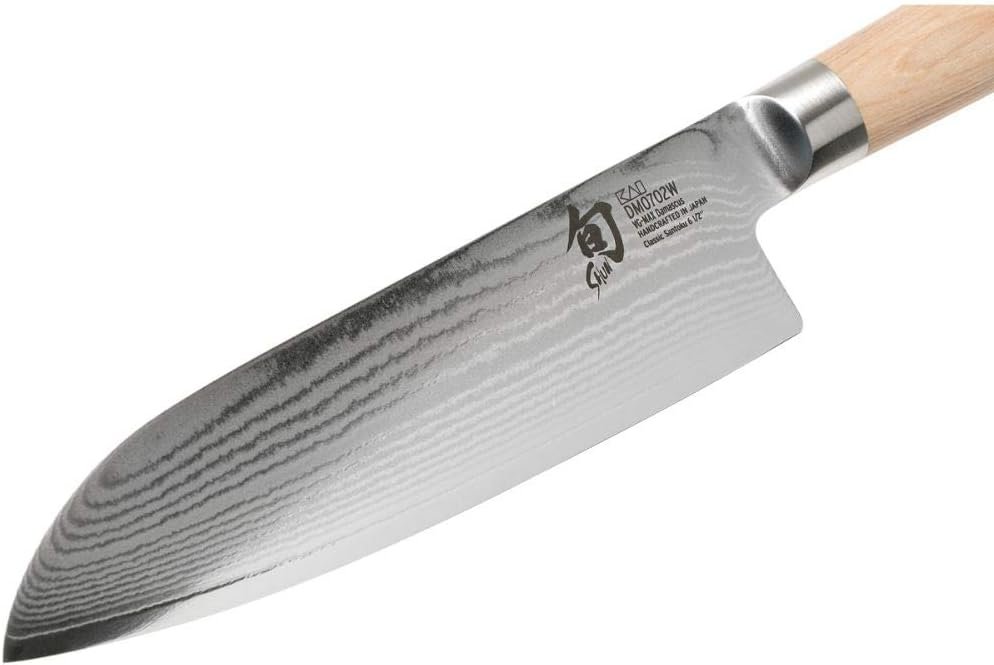
Real-world use: This is the knife I hand to friends who just got their first real cutting board and are done fighting with a dull Farberware set. I use mine for weeknight stir-fry prep — onions, carrots, chicken thighs, the works — and it doesn’t slow down halfway through.
The VG-MAX steel core is hard, so it takes an edge that lasts. I went almost three weeks of near-daily use before I felt any drag on a tomato skin, and that’s with zero babying. The 68 layers of Damascus cladding aren’t just for looks, either. They thin out the area right behind the edge, which actually helps food fall off the blade instead of sticking to it in clumps. It’s not dimpled like a Global, but it doesn’t need to be.
Maintenance is where it gets a little more demanding. This is not a dishwasher knife, and Shun says so directly. Hand wash, dry it right away, and don’t leave it soaking with your dinner dishes. I learned this the hard way when I left mine in the sink overnight during a busy week and found a faint water spot near the bolster the next morning. Nothing structural, but it bugged me.
Pros:
- Edge retention is genuinely excellent — you’re not touching up this blade every week
- The blonde Pakkawood handle stays comfortable for long prep sessions, no hot spots
- Full composite tang keeps the balance forward without feeling front-heavy
Con: Hand-wash only, and the steel will show water spots if you’re not diligent about drying it.
Kai Seki Magoroku AE5200 6.5″ Santoku

Real-world use: This is the knife I recommend to people who aren’t sure they’ll even like using a santoku yet and don’t want to drop $140 to find out. I’ve used mine mostly for weekend meal prep — diced vegetables, thin protein slices, the usual santoku jobs — and honestly, for the price, it punches above its weight.
The Damascus-clad blade is thinner than the Shun’s, and that thinness does a lot of the work here. Food releases from the blade reasonably well on soft vegetables like zucchini, though it clumps more than I’d like on starchy stuff like potatoes. There’s no dimpled surface, so if you’re cutting a lot of sticky root vegetables, you’ll notice it more than you would with a Global.
Edge retention is solid but not in the same league as the Shun. I sharpen mine roughly every 10 to 14 days of regular use, which is fair for the price point. And the smaller 6.5″ blade takes some adjusting if you’re coming from an 8″ German knife — I missed the extra length for the first couple of weeks.
Pros:
- Real Damascus-clad Japanese construction at a price that doesn’t feel like a compromise
- Light enough that wrist fatigue basically isn’t a thing, even after an hour of prep
- Great entry point if you’ve never used a Japanese knife and aren’t ready to commit big money
Con: The shorter 6.5″ blade length feels limiting once you’re used to a full-size chef’s knife.
Global G-2 8″ Chef’s Knife with Custom Engraving
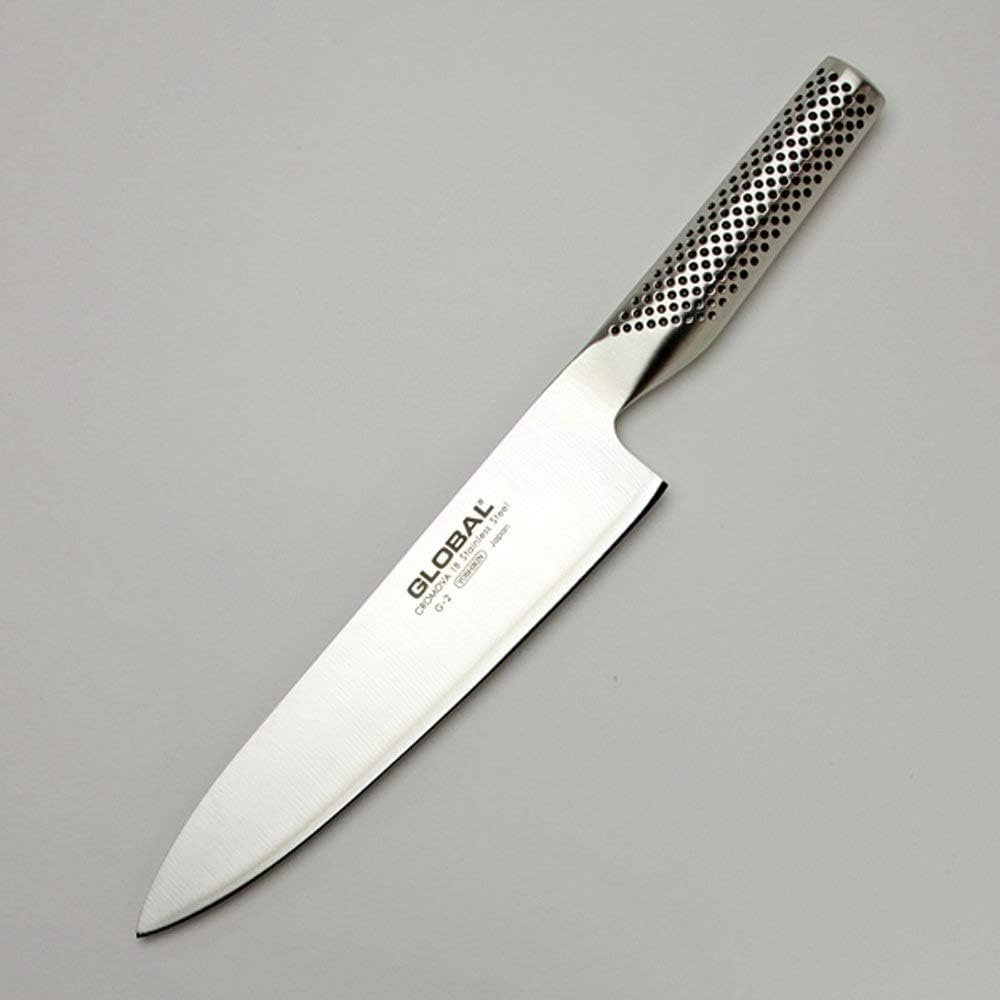
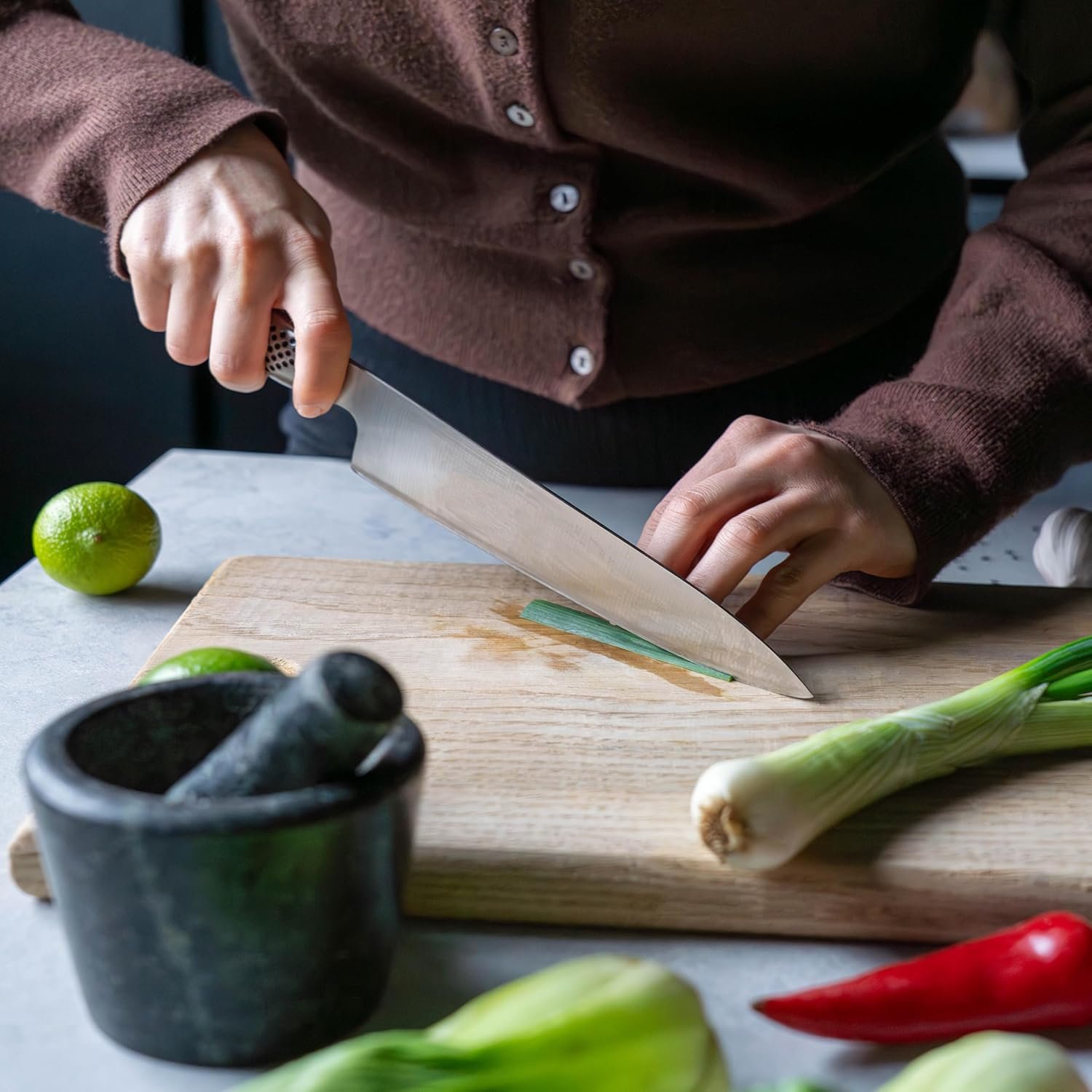
Real-world use: I’ll be upfront — this isn’t a santoku, it’s a gyuto-style chef’s knife, and I’m including it because it’s the knife most Americans switching from German blades actually end up buying first. The 8″ length feels familiar if you’re coming from a Wüsthof, and the weight difference is the first thing you’ll notice. It’s dramatically lighter than most German knives, almost to the point where it feels like it’s missing something the first few times you pick it up.
The dimpled stainless handle is the standout feature here. It’s a genuinely smart design for food release — diced onions and garlic slide off far better than on either the Shun or the Kai, which don’t have dimples at all. If you cook a lot of alliums, this matters more than you’d think.
Here’s the tradeoff nobody puts in the marketing copy: CROMOVA 18 is a softer steel, hardened to around 56-58 HRC, which is noticeably below the Shun’s 60-61 HRC. That means the edge rolls faster, and sharpening it well takes more effort than you’d expect from a $100+ knife, mostly because of the convex grind. I ended up needing a proper whetstone routine within the first month, something I didn’t have to think about with the other two knives on this list.
Pros:
- Dimpled handle design genuinely improves food release, especially with onions and garlic
- Noticeably the lightest knife in this lineup — great for long prep sessions
- One-piece sand-filled handle construction feels balanced in a way molded plastic handles don’t
Con: Softer steel means more frequent sharpening, and it’s harder to get a clean edge on the convex grind than you’d expect.
Sharpness, Food Release, and Maintenance: The Real Breakdown
Since these are the three things that actually matter day-to-day, here’s the short version, no spec-sheet fluff.
Sharpness and edge retention: The Shun wins here, clearly. VG-MAX at 60-61 HRC just holds an edge longer than the other two, full stop. The Kai is a close second for the price — you’ll sharpen it more often, but not dramatically so. The Global lags because CROMOVA 18 is softer steel, which means the edge folds over faster even though it starts out plenty sharp.
Food release: This one goes to the Global, no contest. The dimpled handle doesn’t do anything for the blade itself, but the thin convex grind combined with how the knife is used tends to shed food better on sticky items like garlic and onion. The Shun comes in second thanks to its thin cladding profile. The Kai’s flatter grind means more food clings to the blade, especially with starchy vegetables.
Maintenance: The Kai is the easiest to live with day-to-day, mostly because a lower price tag makes you worry less about babying it. The Shun demands the most discipline — hand wash, dry immediately, no exceptions. The Global is deceptively high-maintenance for its price point, since that softer steel needs a real whetstone routine sooner than you’d expect.
Which One Should You Buy?
Coming straight from a heavy German knife and want the least jarring transition? Go with the Shun Classic Blonde. The weight drop is noticeable but not extreme, and the edge retention means you won’t be sharpening it every other week while you’re still learning the ropes.
Not sure you’ll even like a santoku yet, or working with a tighter budget? The Kai AE5200 is the low-risk option. You’re getting real Japanese steel and construction without betting $140 on a knife shape you’ve never used.
Cutting a ton of onions, garlic, or other sticky vegetables, and don’t mind sharpening more often? The Global G-2’s dimpled handle actually solves a problem the other two don’t, even though it costs you some edge retention.
FAQ
Is a santoku better than a chef’s knife for home cooks?
For most home cooking — vegetables, boneless proteins, general prep — yes, a santoku is easier to control and lighter to use for hours at a time. A chef’s knife still wins if you’re doing a lot of rock-chopping or breaking down bone-in cuts.
Do Japanese knives need special sharpening?
Not really special, just more frequent attention with a whetstone rather than a pull-through sharpener. Harder steels like VG-MAX hold an edge longer between sharpenings, but they take more skill to sharpen well when the time comes.
Why don’t Japanese santoku knives have dimples like the Global?
Dimples are a Global design choice, not a Japanese knife standard. Most santoku makers rely on thin blade geometry and polished bevels for food release instead, which works fine on most vegetables but can lag behind dimpled designs on sticky, starchy foods.
Final Thoughts
If you only take one thing from this: the Shun Classic Blonde 7″ Santoku is still the one I’d hand to someone making their first jump from a heavy German knife. It’s not the cheapest, and it’s not the lowest-maintenance, but it’s the most balanced choice for the switch — sharp enough to matter, forgiving enough to learn on.
If budget is the deciding factor, the Kai AE5200 won’t leave you disappointed. And if onions are your nemesis, the Global’s dimpled handle earns its keep despite the softer steel.
Whichever one fits your kitchen, check current pricing before you buy — Amazon prices on these move more than you’d expect.