
Best Value Japanese Santoku Knife: 3 Options Under $200 (2026 Buyer’s Guide)
Best Value Japanese Santoku Knife: 3 Options Under $200 (2026 Buyer’s Guide)
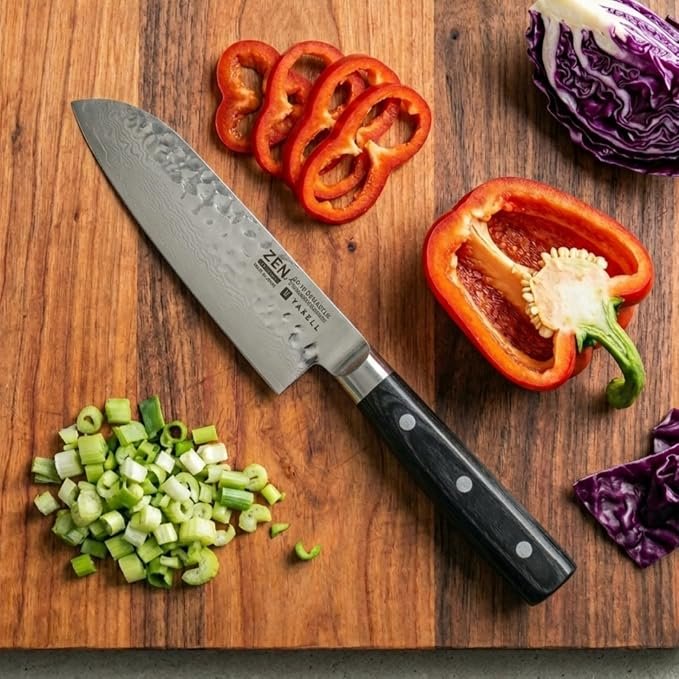
If you’re switching from a heavy German-style chef’s knife and just want one Santoku that won’t let you down, get the Yaxell Zen 165mm Santoku. It’s the best balance of sharpness, food release, and edge retention in this price range. But it’s not the right pick for everyone, so let’s break down why.
Comparison at a Glance
| Knife | Price Range | Steel & Construction | Weight | Best For |
|---|---|---|---|---|
| Kai Seki Magoroku Damascus AE5200 | $90–$115 | 32-layer Damascus stainless cladding, triangular composite handle | ~155g (5.5 oz) | First-timers who want a lighter, nimble knife |
| Yaxell Zen Santoku (165mm) | $140–$175 | 37-layer Damascus, VG-10 core, HRC 61±1, Micarta handle | ~210g (7.4 oz) | Cooks upgrading from German knives who still want some heft |
| Tojiro DP Santoku (F-808) | $40–$55 | 3-layer cladding, VG-10 core, HRC 60±1, composite wood handle | ~150g (5.3 oz) | Budget-conscious buyers who care more about the steel than the looks |
Product Reviews
Kai Seki Magoroku Damascus AE5200
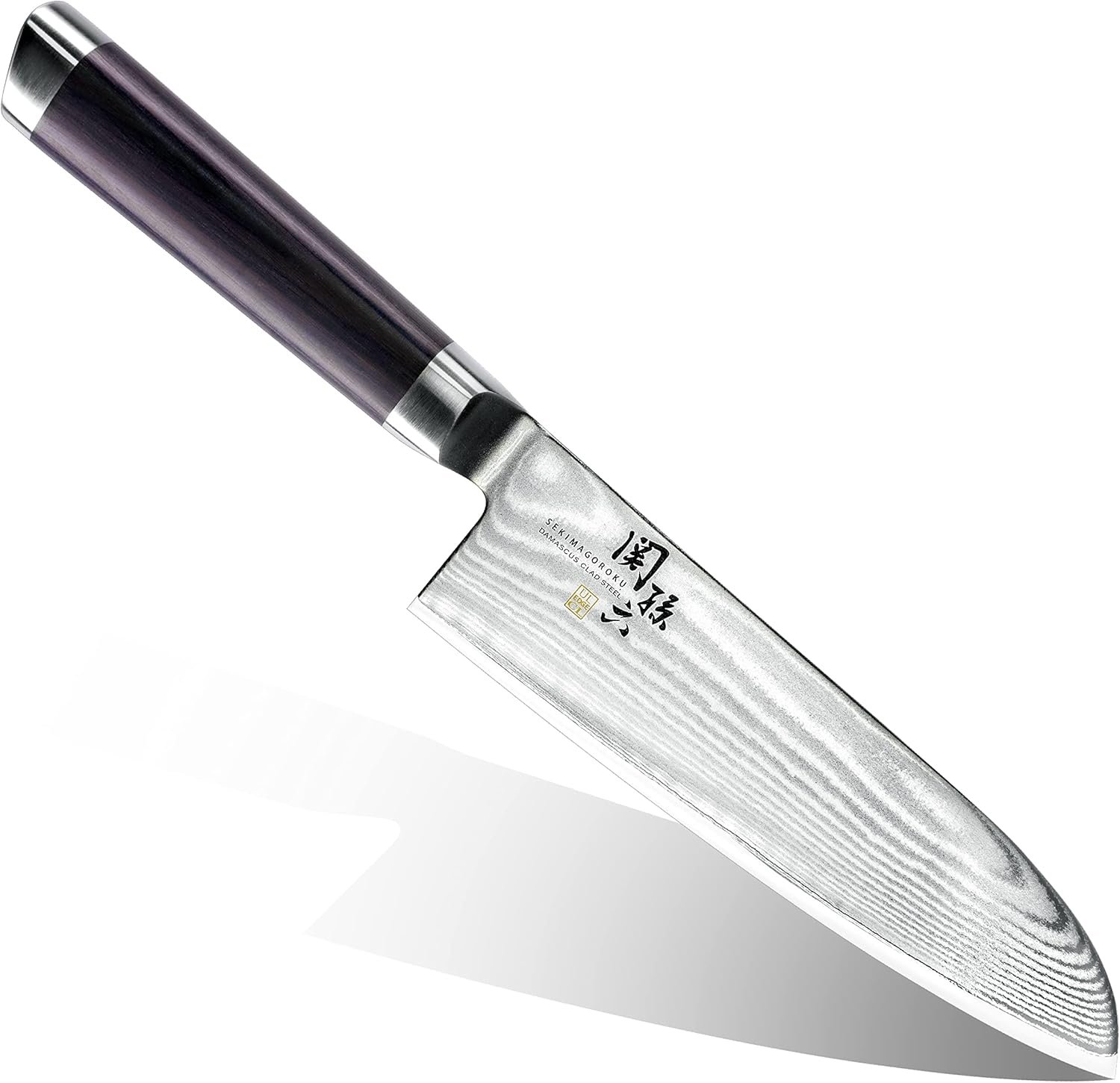
This one’s usually the gateway drug into Japanese knives. It’s light, it looks sharp with that Damascus pattern, and it doesn’t feel intimidating if you’ve never held anything but a Wüsthof.
Where it shines: Weeknight vegetable prep. Onions, carrots, herbs — anything where you’re making a lot of small cuts fast. The light weight means your wrist isn’t doing extra work by the third onion.
Pros:
- The triangular handle actually improves control. I didn’t expect to notice this, but I did.
- Comes shaving sharp out of the box. No “well, it’ll get better after a sharpening” excuses needed.
- Light enough that beginners don’t overcompensate with force, which is half the battle when you’re new to thin Japanese blades.
Cons:
The thin blade doesn’t love hard squash or dense root vegetables. Push too hard and you’ll feel the blade flex a little, which isn’t something you want to feel. I learned this the hard way cutting through a kabocha squash and thinking, “this isn’t a nakiri, dummy.”
Yaxell Zen Santoku (165mm)

This is the one I’d actually recommend to someone coming straight off a heavy German knife. It has enough weight to feel substantial in your hand, but the VG-10 core still gets scary sharp.
Where it shines: Protein prep — chicken breasts, fish fillets, even breaking down a small roast. The extra weight (210g) does some of the work for you on tougher cuts, so it feels more like the knife you’re used to.
Pros:
- The 61 HRC hardness holds an edge noticeably longer than the Kai. I go two to three weeks of daily use before I even think about a honing steel.
- The hammered Damascus finish (Tsuchime) actually helps with food release on sticky stuff like sweet potato. It’s not just decoration.
- Full tang construction gives it a solid, balanced feel that mimics a German knife’s heft without the bulk.
Cons:
At 61 HRC, it’s harder steel, which means it’s less forgiving to sharpen at home. If your sharpening technique is sloppy, you’ll spend more time on the stones than you would with the Tojiro. I chipped a hair of the edge on a frozen bagel once and needed real sharpening skills to fix it, not just a few honing strokes.
Tojiro DP Santoku (F-808)
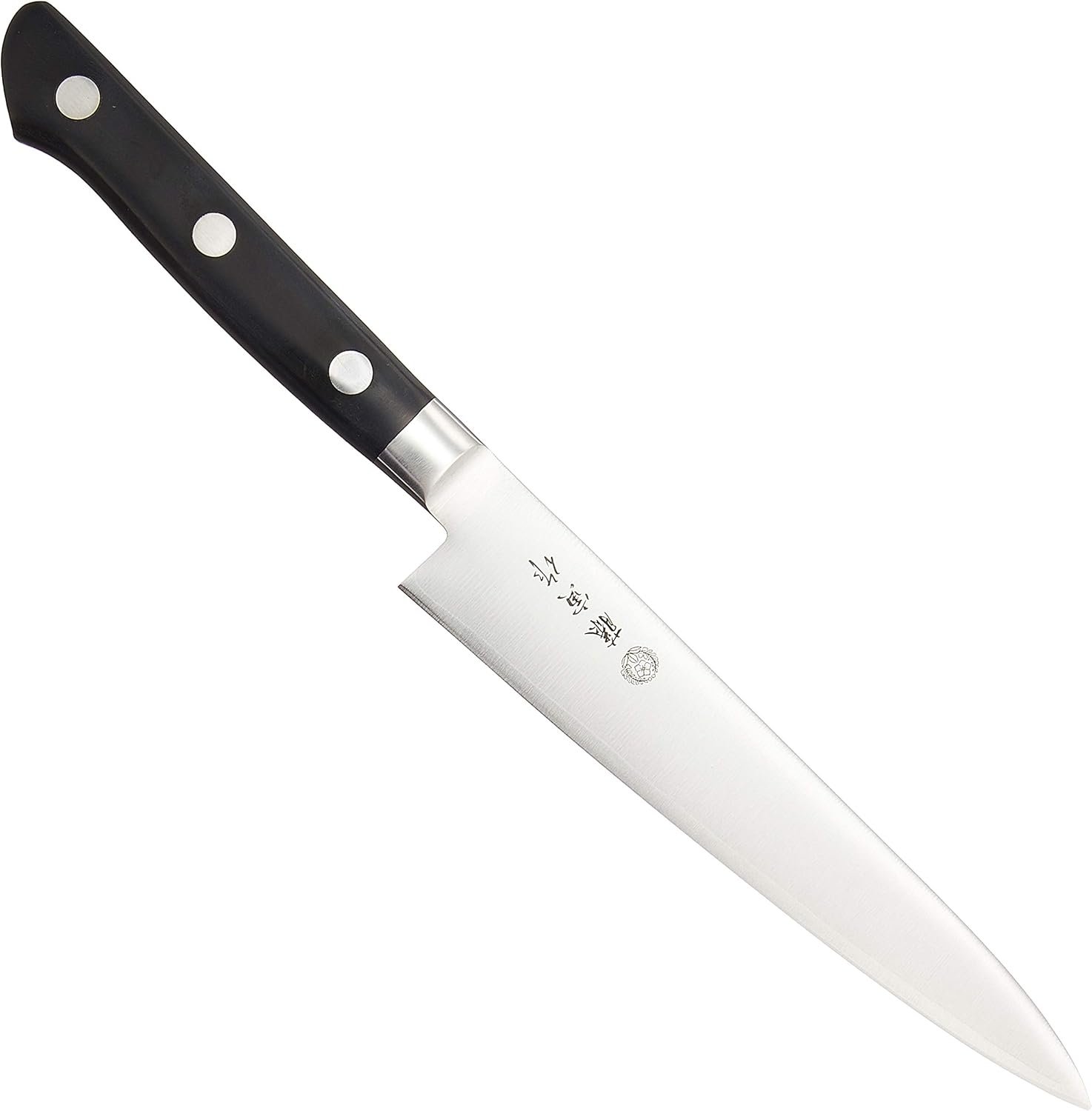
And here’s the value pick. This is what I hand to friends who say “I don’t want to spend $150 on a knife I might not even like.” VG-10 core, similar hardness to the Yaxell, at a third of the price.
Where it shines: Everyday, all-purpose home cooking where you’re not trying to impress anyone — just get dinner on the table. Great “beater knife” that you don’t feel precious about.
Pros:
- VG-10 core steel at this price point is honestly kind of a steal. You’re paying for performance, not for looks.
- Thinner grind than the Yaxell means it glides through vegetables with less resistance.
- Easy to maintain. The 60 HRC hardness is the sweet spot between edge retention and being sharpenable on basic whetstones.
Cons:
The plain composite handle and lack of any Damascus pattern make it look and feel like a budget knife, because it is one. If you want something that looks the part on your counter or as a gift, this isn’t it. I still remember a dinner guest picking it up and asking, “wait, is this the good knife?”
Which One Should You Buy?
Here’s how I’d sort readers into buckets:
“I’ve never used a Japanese knife and I’m nervous about it.”
Go with the Kai AE5200. It’s light, forgiving, and looks good enough that you’ll actually want to use it instead of leaving it in the block.
“I’m coming from Wüsthof or Henckels and I don’t want it to feel like a toy.”
Get the Yaxell Zen. The extra weight bridges the gap so the transition doesn’t feel jarring.
“I just want good steel and don’t care about looks.”
The Tojiro DP wins on pure value. You’re getting the same core steel type as knives twice its price.
“I want the sharpest edge, full stop.”
Between the Yaxell and the Tojiro, both use VG-10, so it comes down to hardness and grind — the Yaxell edges it out slightly on raw hardness (61 vs 60 HRC), but the Tojiro’s thinner grind makes it feel almost as sharp in practice.
Frequently Asked Questions
What’s the difference between a Santoku and a Gyuto?
A Santoku has a flatter edge and a shorter, wider blade, which makes it better for a rocking or push-cutting motion on vegetables. A Gyuto is longer and curves more toward the tip, which suits rock-chopping and slicing meat. If you only own one knife and mostly cook vegetables and proteins in smaller portions, Santoku is usually the easier daily driver.
Do Japanese Santoku knives need special sharpening?
Not special, exactly, but they do respond better to whetstones than to pull-through electric sharpeners, which can be too aggressive on the thinner edge angle. A basic 1000/6000 grit combo stone will keep any of these three knives in great shape.
Is a $150 Japanese knife actually better than a $40 one?
Sometimes, and sometimes not as much as you’d think. The Tojiro DP in this list uses the same VG-10 core as the Yaxell Zen at a fraction of the price — you’re mostly paying extra for the Damascus cladding, the fancier handle material, and the finish work. If performance is all you care about, the price gap matters less than it looks.
Final Thoughts
If you want the safest all-around pick for someone switching from a heavy Western knife, the Yaxell Zen Santoku is still my top recommendation. It’s the one knife on this list that doesn’t ask you to compromise on weight, sharpness, or edge retention.
But don’t sleep on the Tojiro DP if your budget’s tight — it punches well above its price tag. Whichever one you land on, check current pricing before you buy, since Amazon shuffles these around during sales.
See the Yaxell Zen Santoku on Amazon
Check price on Amazon →