
Best Japanese Santoku Knife Comparison: Shun vs. Yaxell vs. Kai (2026 Buyer’s Guide)
Shun Classic vs. Yaxell Zen vs. Kai Seki Magoroku: Which Santoku Knife Should You Buy?
Disclosure: This post contains Amazon Associate links. If you buy through one of them, I earn a small commission at no extra cost to you. I only recommend knives I’ve actually used and would buy again.
So you’ve been cooking with a heavy German chef’s knife for years, and something just isn’t clicking anymore. Maybe your wrist is tired by the time you’re through a pile of onions. If you want the short answer: the Shun Classic Santoku is the best all-around pick for most home cooks switching from Western knives, but the Yaxell Zen and Kai Seki Magoroku both earn their spot on this list for specific kitchens and budgets.
I’ve spent real time with all three of these, not just unboxing them for a photo. Here’s what actually matters when you’re the one holding the knife at 6pm trying to get dinner on the table.
Comparison at a Glance
| Knife | Price Range | Steel & Construction | Weight | Best For |
|---|---|---|---|---|
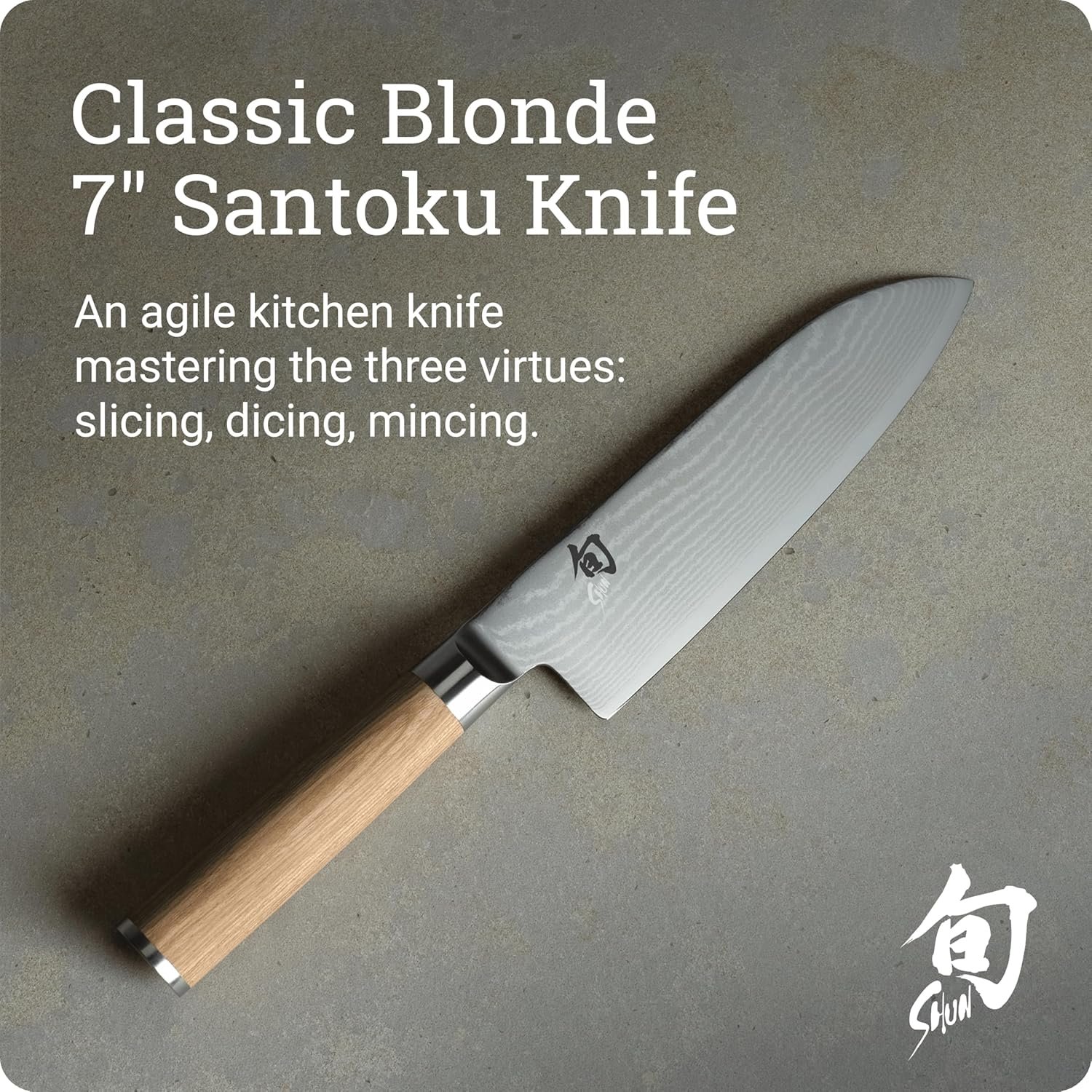
| Shun Classic Santoku 7″ | $130–$150 | VG-MAX core, 34-layer Damascus per side, hollow-ground (Granton) edge | 6.8 oz (194g) | Cooks who want the closest thing to a “no-downside” upgrade |
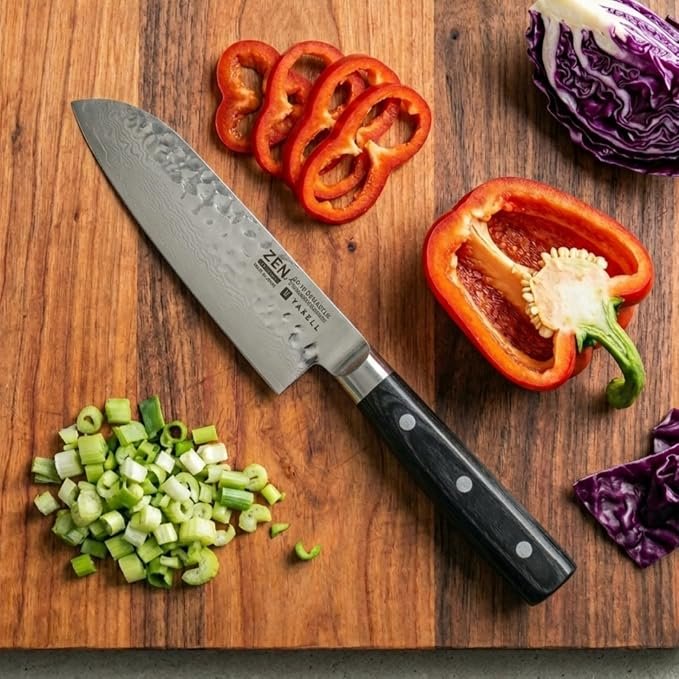
| Yaxell Zen Santoku 165mm | $150–$180 | VG-10 core, 37-layer Damascus, hammered tsuchime finish | 7.4 oz (210g) | Cooks coming from heavy German knives who don’t want the weight shock to feel too drastic |
| Kai Seki Magoroku Damascus AE5200 | $60–$100 | Clad stainless composite, 32-layer Damascus pattern | 5.5 oz (155g) | Budget-conscious first-timers who just want to try a real Japanese knife without committing $150 |
Product Reviews
Shun Classic Santoku Knife 7-inch
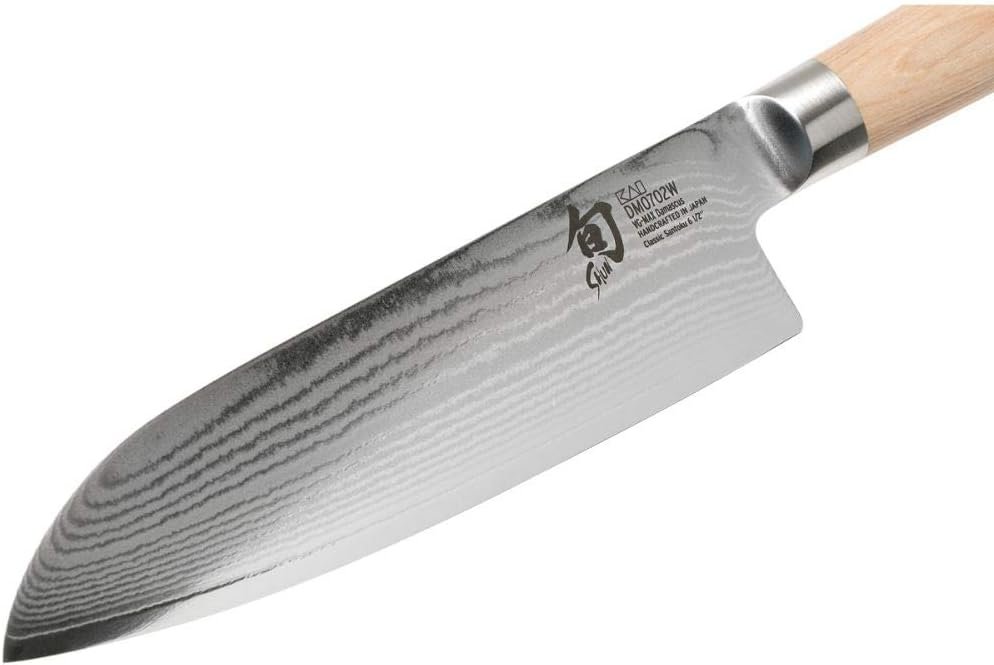
This is the knife I hand to friends who tell me they’re “not sure they’ll like a Japanese knife.” It almost always converts them.
Where it shines: Weeknight vegetable prep. Onions, carrots, cabbage, all of it. The Granton dimples along the blade actually do something — potato slices don’t stick to the side the way they do on a flat-ground blade. You notice it most with starchy or wet vegetables.
Pros
- The VG-MAX steel holds an edge for weeks of regular home use before it needs a touch-up strop
- At under 200 grams, it’s genuinely easy on the wrist after years of a heavy German knife
- The hollow-ground dimples reduce food sticking noticeably on things like potatoes and squash
Cons
- The handle is comfortable, but it’s not shaped for anyone who likes a lot of finger clearance near the bolster. Big hands might feel a little cramped after a long prep session.
I learned this one the hard way: don’t put it in the dishwasher, even once. The heat and detergent will dull the edge faster than actual cutting will.
Yaxell Zen Santoku Knife 165mm (37-Layer Damascus)

The Zen is the knife I recommend when someone tells me they love the look of Japanese knives but they’re nervous the blade will feel too flimsy after years of a heavy Wüsthof or Henckels.
Where it shines: Proteins and denser vegetables — winter squash, sweet potatoes, chicken breast. The extra weight compared to the Shun gives it a bit more momentum through tougher cuts, so it feels less like a completely different tool and more like a lighter, sharper version of what you’re used to.
Pros
- VG-10 core steel takes a genuinely scary-sharp edge right out of the box
- The heavier balance (210g) makes the transition from German knives feel less abrupt
- The Micarta handle doesn’t get slick when your hands are wet, which matters more than people expect
Cons
- The hammered tsuchime finish looks great, but it’s not as effective at food release as true Granton dimples. Wet cucumber slices still cling to the blade more than I’d like.
I learned this one the hard way too: the hammered texture collects grime in the low spots if you don’t dry it properly right after washing. Takes ten extra seconds and saves you a scrub session later.
Kai Seki Magoroku Damascus AE5200 Santoku 6.5 inches
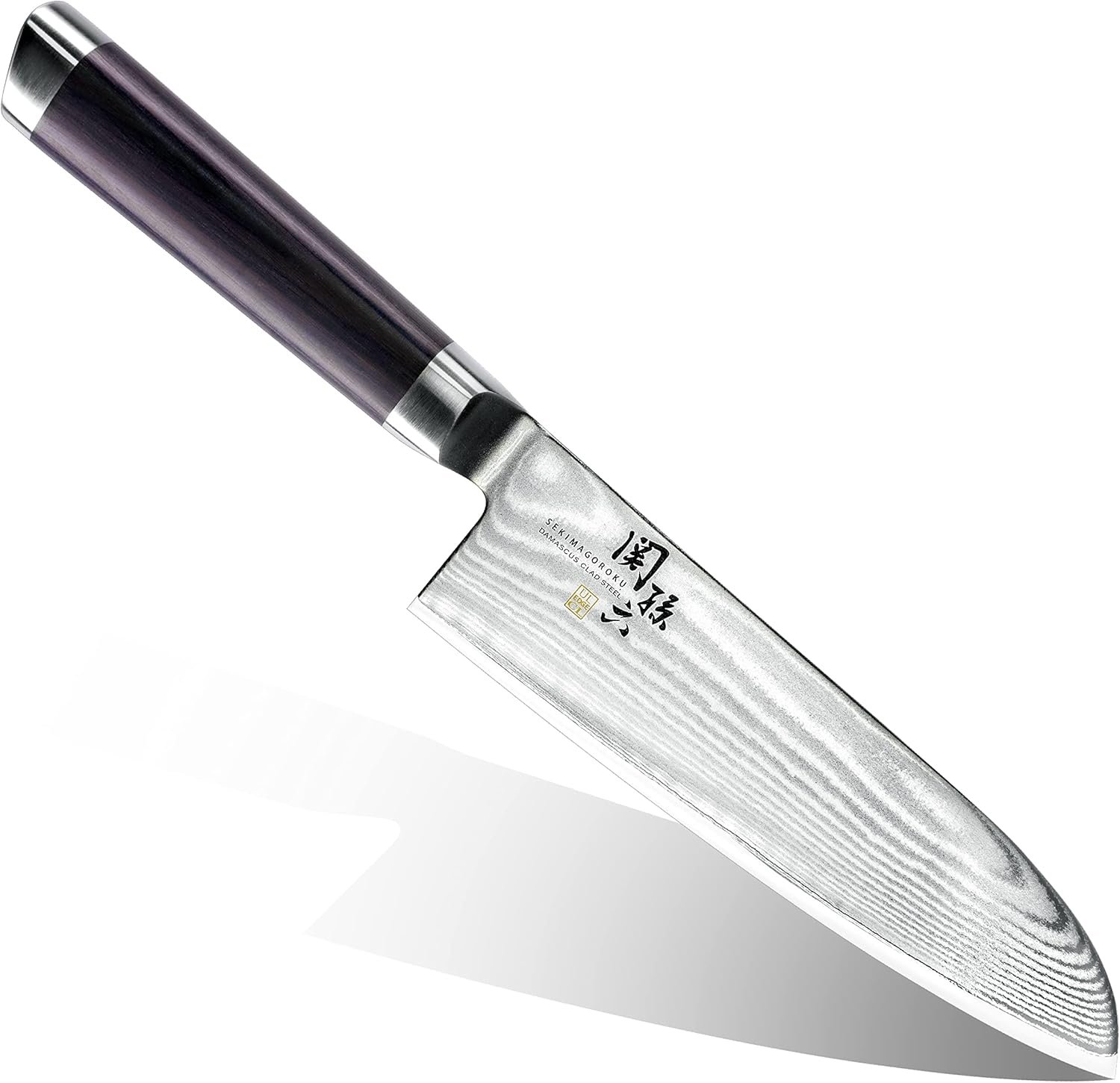
This is the “try before you fully commit” knife. And honestly, for a lot of home cooks, it’s enough.
Where it shines: Everyday chopping — herbs, garlic, basic vegetable prep for two or three people a night. It’s not trying to be a pro-grade tool, and it doesn’t pretend to be.
Pros
- The price point makes it an easy first Japanese knife to try without much financial risk
- Light in the hand at 155g, which is a relief if you’ve been fighting a heavy Western knife
- The Damascus pattern looks far more expensive than the price tag suggests
Cons
- No hollow-ground or dimpled section on the blade, so wet or starchy food sticks noticeably more than on the Shun or Yaxell. You’ll be shaking the blade or wiping it mid-prep more often.
The steel here isn’t a named premium alloy like VG-10 or VG-MAX, so don’t expect it to hold an edge as long between sharpenings. It’s still sharp. It just needs more frequent honing.
Which One Should You Buy?
If you want the safest, most well-rounded upgrade from a German knife: Go with the Shun Classic. It’s the one least likely to disappoint you regardless of what you’re cooking on a given night.
If you loved the heft of your old knife and don’t want to lose all of it: The Yaxell Zen keeps a little more weight and momentum while still being dramatically lighter than a typical Western chef’s knife. It’s also the sharpest out of the box of the three.
If you’re not sure you’ll even like a Santoku shape and don’t want to spend $150 to find out: Start with the Kai Seki Magoroku. It’s a real Japanese knife, it’s genuinely sharp, and if you end up loving the format, you’ll know exactly what to upgrade for next time.
If your kitchen leans heavily on wet vegetables (potatoes, squash, cucumbers): Prioritize the Shun. The Granton dimples aren’t a gimmick — they solve a real, everyday annoyance.
FAQ
Is a Santoku knife better than a chef’s knife for home cooks switching from German knives?
Not universally better, but it’s often easier to adjust to. Santokus are lighter and flatter-bellied, which suits push-cutting rather than the rocking motion a German chef’s knife uses. Most home cooks adapt within a couple of weeks.
Do I need a whetstone for these knives, or will a pull-through sharpener work?
A pull-through sharpener will eventually wear away the thin edge these knives are ground to, and it can strip the Damascus cladding over time. A whetstone or a honing rod plus occasional professional sharpening is the better long-term choice for VG-MAX or VG-10 steel.
Why do some Japanese Santoku knives have dimples and others don’t?
The dimples (Granton edge or hollow-grind) create small air pockets between the blade and the food, reducing suction and sticking. Cheaper knives, like the Kai Seki Magoroku here, skip this feature to keep costs down, so food sticks more on wet or starchy cuts.
Final Thoughts
If you only take one recommendation from this whole comparison, make it the Shun Classic Santoku. It’s not the sharpest out of the box, and it’s not the cheapest, but it’s the one that handles the widest range of everyday cooking without a single glaring weakness. The Yaxell Zen is worth the extra money if you want a knife that feels closer to your old German blade in heft. And the Kai Seki Magoroku is a smart, low-risk way to find out if you’re a Japanese-knife person at all.
Whichever one you land on, do yourself a favor and pick up a basic whetstone at the same time. None of these knives will perform the way they should if you’re maintaining them with the wrong tools.