
Global G-5 7″ Vegetable Knife Review: Is the Nakiri Everyone’s Talking About Worth It?
Global G-5 7" Vegetable Knife Review: Is the Nakiri Everyone’s Talking About Worth It?
Disclosure: This post contains Amazon affiliate links. If you buy through one of these links, I earn a small commission at no extra cost to you.
If you’ve landed here, you’ve probably already seen the Global G-5 recommended somewhere and want to know if it’s actually as good as people say. Short answer: it’s one of the sharpest, most balanced vegetable knives you can buy under $150, but the handle isn’t for everyone. Let’s get into why.
This one’s technically a Nakiri-style vegetable knife, not a santoku or a chef’s knife, so it’s built for a specific job. If you cook a lot of vegetables and want a dedicated tool for it rather than reaching for your all-purpose knife every time, this is the category you’re shopping in. And Global’s been making this exact knife for decades now, so it’s not some trendy new release — it’s a proven design with a long track record.
Key Specifications
Hands-on Review
Sharpness and edge retention
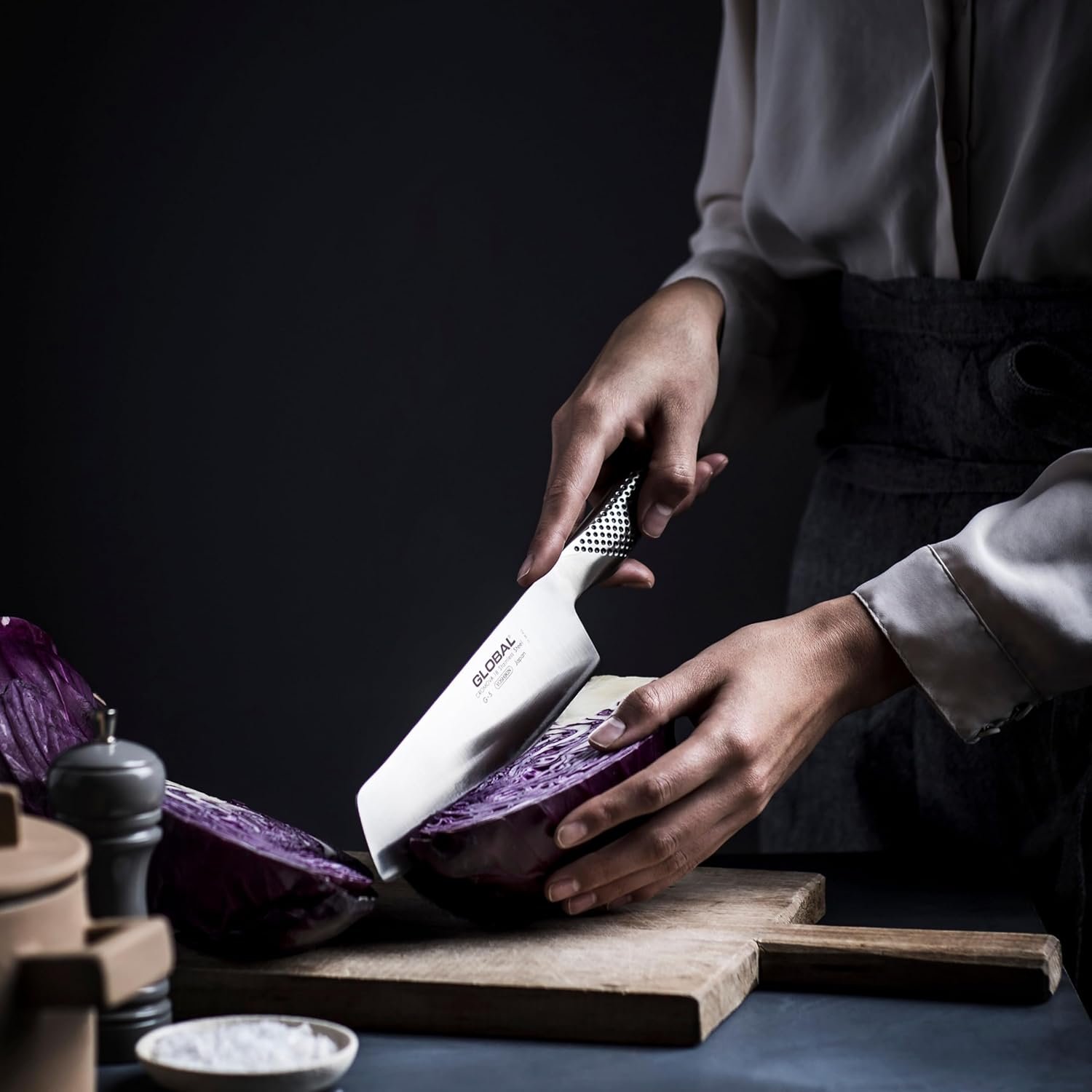
Out of the box, this thing is sharp. I mean the kind of sharp where you want to be a little careful the first time you use it, because it’ll go through a tomato without you even feeling resistance. The flat, straight edge is built for a straight up-and-down chop, not a rocking motion, so it took me a session or two to stop trying to rock it like a chef’s knife. Once I adjusted, dicing onions and squaring off cabbage got noticeably faster.
Edge retention is good, not incredible. CROMOVA 18 is hardened to 56–58 HRC, which is softer than the steel in something like a Shun. So the edge doesn’t roll fast, but you will notice it dulling gradually after three or four weeks of regular use. A few passes on a honing rod bring it right back, though, and you’re not looking at a full resharpen until a couple months in with normal home use.
Handle and grip
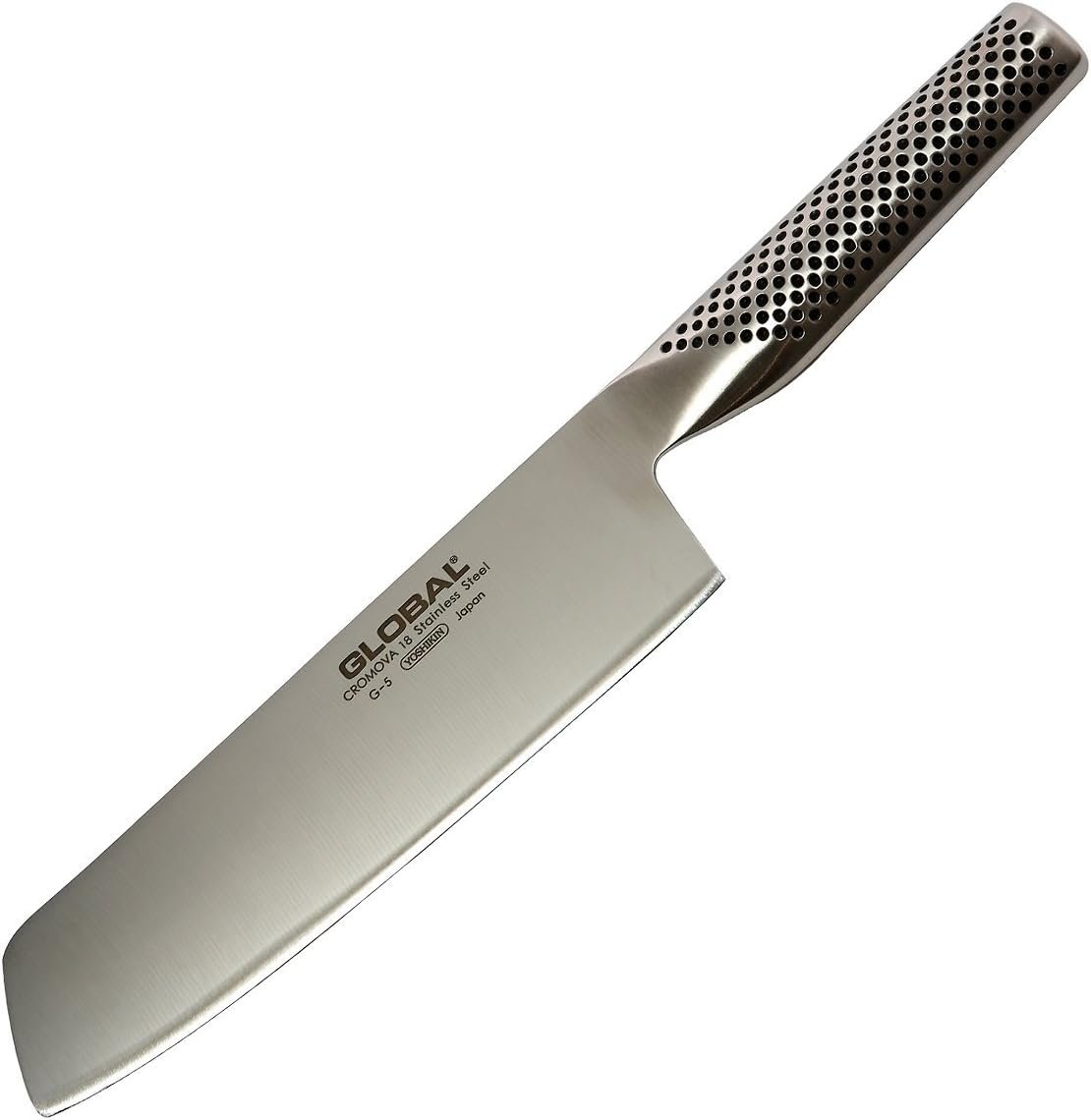
This is the part people either love or don’t. The dimpled steel handle looks great and feels genuinely well-balanced in the hand, thanks to that sand-filled hollow construction Global’s known for. But here’s the thing nobody tells you upfront: it gets slippery when it’s wet. I learned this the hard way mid-prep with soapy hands, and the knife nearly slid right out of my grip. It’s not dangerous exactly, just something you need to be mindful of, especially if you’re rinsing vegetables between cuts.
If you’ve got smaller to average-sized hands, the handle shape works well. If your hands run larger, it can feel a little narrow after long stretches of chopping. One reviewer I came across compared it to holding a smooth metal bar, which is a fair description — there’s no bolster, no thumb rest, just a clean dimpled surface that you either get along with or don’t.
Blade shape and everyday use
The square tip and flat edge take a bit of relearning if you’ve spent years using a curved chef’s knife. You’re not rocking the blade through cuts here. You’re lifting and chopping straight down, using the full length of the edge to get through the vegetable in one clean motion. Once that clicks, it’s genuinely quick for stuff like julienning carrots or breaking down a head of cabbage. It’s less useful for anything that needs a rocking motion, like mincing garlic or herbs, so don’t expect this to replace your main chef’s knife entirely.
Maintenance
Hand wash only, and dry it right away. The steel resists rust well, but the softer alloy means it can pick up a dull, foggy look if you let it air dry instead of towel-drying it. It’s not high-maintenance compared to a full Damascus blade, but it’s not a “toss it in the dishwasher” knife either.
What Other Users Say
I went through a solid chunk of the Amazon reviews on this one, and a pattern shows up fast. The consensus among users is that the balance and straight-down chopping motion make repetitive prep — onions, peppers, big batches of vegetables — noticeably faster and less tiring than with a regular chef’s knife. Several reviewers specifically mention using it for restaurant-level prep work or big weekend meal prep sessions.
On the flip side, I found more than one user complaining about the handle getting slippery once their hands are wet, even with the dimple pattern. It’s the single most repeated complaint across reviews, and it lines up exactly with what I ran into myself. So if wet-hand grip is a dealbreaker for you, it’s worth knowing that going in rather than after you buy it.
Pros & Cons
Pros
- Exceptionally sharp out of the box, and the straight edge makes fast work of repetitive vegetable prep
- Impressively light and well-balanced for a knife in this price range
- Rust and stain resistant enough that you don’t baby it the way you would carbon steel
Cons
- The dimpled steel handle still gets slippery with wet or soapy hands, despite Global’s grip design
- Edge retention is solid but clearly a step below harder Japanese steels like VG-MAX — expect more frequent honing
Alternatives & Conclusion
If your prep work is mostly vegetables — onions, cabbage, root vegetables, big cutting boards full of produce — the Global G-5 earns its price. It’s sharp, it’s light, and once you get used to the straight-chop motion, it’s genuinely faster than a curved-blade knife for that kind of work. Just keep a towel nearby and dry your hands before you pick it up.
If you’re not sold on the Nakiri shape, or you want something that handles a wider range of kitchen tasks — meat, fruit, general all-purpose cutting — it’s worth comparing this against a santoku or a standard gyuto before you commit. I’ve broken down how the G-5’s siblings stack up against other Japanese knives in this santoku comparison guide, which is a good next stop if you’re still deciding between shapes.
Either way, check current pricing before you buy. Global’s Amazon pricing shifts more often than you’d expect for a knife this well-established.