
How to Choose a Japanese Chef Knife Under $200
How to Choose a Japanese Chef Knife Under $200 (Without Getting Burned)
Disclosure: This post contains Amazon affiliate links. If you buy through one of these links, I earn a small commission at no extra cost to you.
You’ve probably already made the mistake I made: typing “best Japanese knife” into Amazon and staring at 40 tabs, half of them in steel names you can’t pronounce, the other half just claiming to be “razor sharp” with zero explanation of why. So you either freeze up and buy nothing, or you grab whatever has the most stars and hope for the best.
I’ve bought the wrong knife more than once chasing a good review score instead of understanding what actually mattered. So this guide is the thing I wish someone had handed me before my first Japanese knife purchase — no fluff, just the stuff that actually changes how a knife performs in your kitchen.
Core Factors to Consider
Steel: VG-10 vs. White Steel vs. Blue Steel
This is where most beginners get lost, and it’s honestly the single biggest factor in how a knife feels and behaves.
VG-10 is a stainless steel, and it’s the one you’ll see most often under $200. It holds a good edge, resists rust with basically no babying, and it’s forgiving if you’re new to knife care. Most of the knives I recommend to first-time buyers use VG-10 or something close to it, because you get real performance without needing a whetstone routine down to a science.
White steel (Shirogami) and Blue steel (Aogami) are carbon steels, and they’re a different animal entirely. White steel is purer and takes an extremely fine edge, but it reacts to acid and moisture, so it’ll develop a patina — or worse, rust — if you’re not drying it immediately after every use. Blue steel adds tungsten and chromium, which gives it better edge retention than white steel and a bit more forgiveness, but it’s still a carbon steel that needs real attention.
Here’s my honest take: if you’re not already someone who dries your knife the second you’re done with it, skip carbon steel for now. I learned this the hard way with a white steel knife I let air-dry on the counter overnight. Woke up to a rust spot the size of a dime. Stainless steels like VG-10 exist for a reason, and under $200, they’re usually the smarter buy anyway.
Shape: Santoku vs. Gyuto vs. Nakiri
Santoku is the all-purpose choice, and it’s probably where you should start if you’re only buying one knife. It’s shorter and lighter than a Western chef’s knife, with a flatter edge that’s built for up-and-down chopping rather than the rocking motion German knives use.
Gyuto is the Japanese take on a Western chef’s knife. It’s got more curve to the blade, so if you already rock-chop the way you learned from watching cooking shows, a gyuto will feel more familiar than a santoku will.
Nakiri is a specialist, not a generalist. It’s a rectangular, straight-edged blade built almost entirely for vegetables. Great if you cook a ton of produce, but you’ll still need something else for proteins.
If you can only buy one knife right now, go santoku or gyuto. Save the nakiri for later, once you know your cutting habits well enough to know if you actually need a vegetable specialist.
Budget: What You’re Actually Paying For Under $200
Under $200, you’re paying for three things: steel quality, construction (how many layers of cladding, how the tang is built), and fit and finish. You are not paying for a knife that’s meaningfully sharper than a well-made $80 knife — a $70 Tojiro can be just as sharp out of the box as a $150 Shun. What the extra money usually buys you is better edge retention, nicer handle materials, and a bit more polish in the finishing work.
So don’t assume more expensive automatically means better performance. It usually means better materials and craftsmanship, which matter more over years of use than they do on day one.
Step-by-Step Guide: Picking Your Knife (and Keeping It Sharp)
Step 1. Pick your primary use case. Are you mostly doing vegetables and proteins for weeknight dinners? Go santoku. Coming from a Western chef’s knife and don’t want to relearn your technique? Go gyuto.
Step 2. Set a steel preference based on your actual habits, not your aspirations. If you’re honest that you won’t dry your knife every single time, pick VG-10 or another stainless option. Save carbon steel for your second or third knife, once you’ve built the habit.
Step 3. Match blade length to your cutting board and hand size. A 6.5″ santoku is plenty for most home kitchens, especially with limited counter space. An 8″ gyuto gives you more reach if you’re breaking down larger cuts of meat regularly.
Step 4. Check the handle material and shape before buying, not after. Pakkawood, laminated wood, and molded resin all feel different in hand. If a retailer has good product photos or a spec sheet describing dimensions, use them — this matters more than most buyers realize until they’re 20 minutes into prep with a handle that doesn’t fit their grip.
Step 5. Learn basic maintenance before the knife even arrives.
- Hand wash only. Dishwashers are brutal on both the edge and the handle material. Every knife on this list says so, and every knife means it.
- Dry immediately. Don’t let it air dry in a rack, and don’t leave it in the sink. This one habit prevents 90% of the rust and water-spot complaints you’ll read in reviews.
- Hone regularly, sharpen occasionally. A honing rod (ceramic, not steel, for most Japanese blades) realigns the edge between uses. Actual sharpening on a whetstone should happen every few weeks to a couple months, depending on how much you cook.
- Store it so the edge doesn’t touch anything. A knife block, a magnetic strip, or an edge guard all work. Tossing it loose in a drawer is how edges get dinged and how people get cut reaching in blind.
Top Recommendations Preview
Once you know your steel preference and blade shape, here’s where I’d start looking, based on knives I’ve actually used for months, not just unboxed for photos.
Shun Classic Blonde 7″ Santoku — VG-MAX steel, excellent edge retention, and the easiest jump if you’re coming from a heavy German knife. Sits around $130–150.
Kai Seki Magoroku AE5200 6.5″ Santoku — A real Damascus-clad Japanese blade for $70–100, and the low-risk pick if you’re not sure you’ll love the santoku shape yet.
Global G-2 8″ Chef’s Knife — The lightest of the bunch, with a dimpled handle that genuinely helps with food release on sticky vegetables, though the softer steel means more frequent sharpening.
Tojiro Fujitora Pro DP FU-802 150mm Petty Knife — Not a main knife, but a fantastic, sharp detail blade under $80 for peeling, trimming, and small prep work.
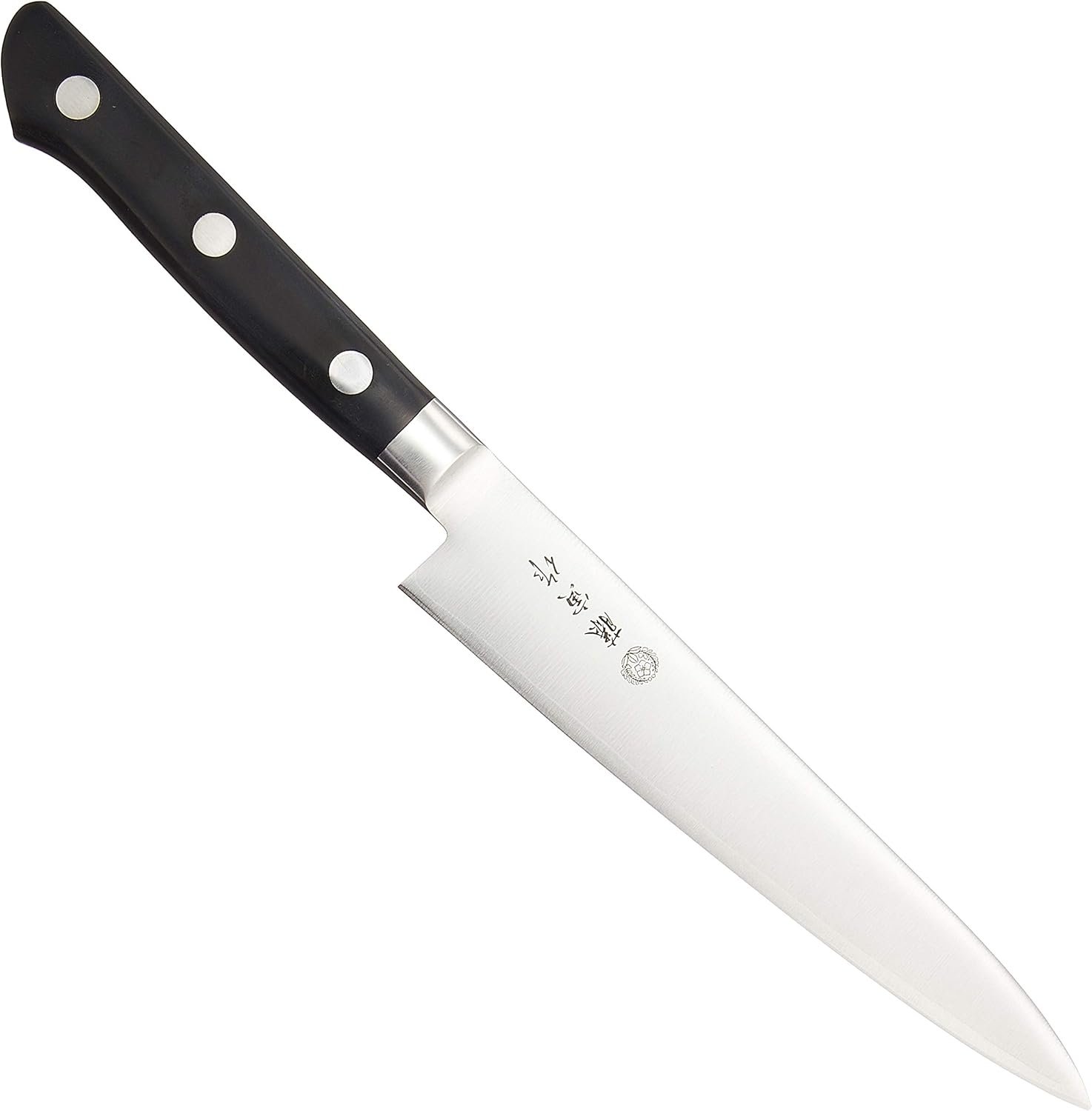
I go deeper on how these stack up against each other, including which one actually makes sense for someone switching from German knives, in the full santoku comparison guide. And if you want the complete rundown on the Tojiro petty knife specifically, including what actual buyers say after using it, check out the standalone review.
Conclusion
Picking a Japanese chef knife under $200 doesn’t have to be complicated, but it does take a few minutes of actual thought before you hit “buy.” Nail down your steel preference based on how disciplined you’ll realistically be with drying and care, pick a shape that matches how you already cook, and don’t assume the priciest option in your budget range is automatically the sharpest.
Get those three things right, and you’ll end up with a knife that earns its place in your kitchen for years, not one that ends up shoved in a drawer after the first rust spot shows up.
Tojiro Fujitora Pro DP FU-802 150mm Petty Knife
Check Current Price on Amazon →